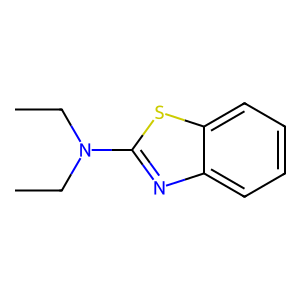
N,N-diethyl-1,3-benzothiazol-2-amine
CAS No.:
24255-48-9
M. Wt:
206.30700
M. Fa:
C11H14N2S
InChI Key:
ZOFDVIIRCRBXCB-UHFFFAOYSA-N
Names and Identifiers of N,N-diethyl-1,3-benzothiazol-2-amine
CAS Number |
24255-48-9 |
|---|---|
MDL Number |
MFCD01417992 |
IUPAC Name |
N,N-diethyl-1,3-benzothiazol-2-amine |
InChI |
InChI=1S/C11H14N2S/c1-3-13(4-2)11-12-9-7-5-6-8-10(9)14-11/h5-8H,3-4H2,1-2H3 |
InChIKey |
ZOFDVIIRCRBXCB-UHFFFAOYSA-N |
Canonical SMILES |
CCN(CC)C1=NC2=CC=CC=C2S1 |
UNSPSC Code |
12352100 |
Physical and chemical properties of N,N-diethyl-1,3-benzothiazol-2-amine
Boiling Point |
295.6±23.0 °C(Predicted) |
|---|---|
Density |
1.163 g/cm3 |
Exact Mass |
206.08800 |
LogP |
3.14250 |
Molecular Formula |
C11H14N2S |
Molecular Weight |
206.30700 |
PSA |
44.37000 |
Safety Information of N,N-diethyl-1,3-benzothiazol-2-amine

Applications of N,N-diethyl-1,3-benzothiazol-2-amine
Benzothiazol-2-yl-diethyl-amine has several notable applications:
- Pharmaceuticals: Its derivatives are explored for use as drugs targeting various diseases, including cancer and infections.
- Agricultural Chemicals: Some compounds have been investigated for their potential as fungicides or herbicides.
- Dyes and Pigments: Benzothiazole compounds are utilized in dye formulations due to their vibrant colors and stability.
Interaction Studies of N,N-diethyl-1,3-benzothiazol-2-amine
Studies examining the interactions of benzothiazol-2-yl-diethyl-amine with biological targets reveal its potential as a lead compound for drug development:
- Kinase Inhibition Studies: Research indicates that certain derivatives can inhibit histidine kinases, affecting bacterial virulence .
- Binding Affinity Assessments: Molecular docking studies have been conducted to evaluate how well these compounds bind to specific targets, providing insights into their mechanism of action .
Biological Activity of N,N-diethyl-1,3-benzothiazol-2-amine
Benzothiazole derivatives, including benzothiazol-2-yl-diethyl-amine, have shown various biological activities:
- Antimicrobial Activity: Compounds containing benzothiazole structures often exhibit antimicrobial properties against bacteria and fungi .
- Anticancer Potential: Some derivatives have been studied for their ability to inhibit cancer cell proliferation, particularly through mechanisms involving kinase inhibition .
- Anti-inflammatory Effects: Certain benzothiazole compounds have demonstrated anti-inflammatory activity, making them potential candidates for treating inflammatory diseases .
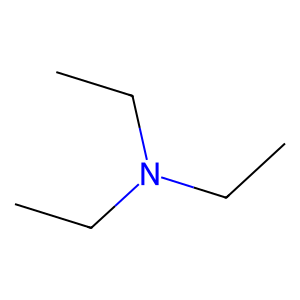 Cas:121-44-8

 Cas:615-20-3

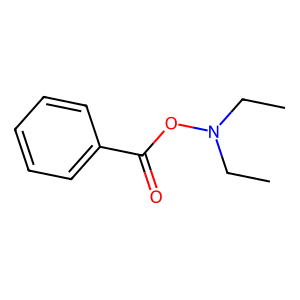 Cas:61582-64-7
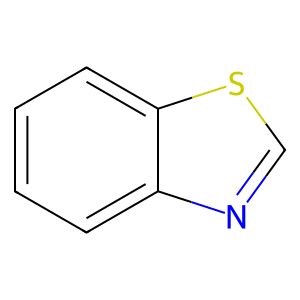 Cas:95-16-9
 Cas:7442-11-7