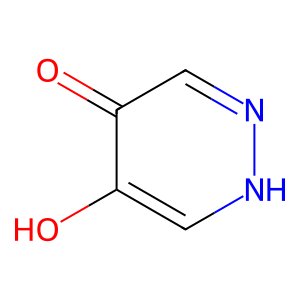
Pyridazine-4,5-diol
CAS No.:
55271-47-1
M. Wt:
112.08700
M. Fa:
C4H4N2O2
InChI Key:
PLYGYRGRWMDMDZ-UHFFFAOYSA-N
Names and Identifiers of Pyridazine-4,5-diol
CAS Number |
55271-47-1 |
|---|---|
IUPAC Name |
5-hydroxy-1H-pyridazin-4-one |
InChI |
InChI=1S/C4H4N2O2/c7-3-1-5-6-2-4(3)8/h1-2H,(H,5,8)(H,6,7) |
InChIKey |
PLYGYRGRWMDMDZ-UHFFFAOYSA-N |
Canonical SMILES |
C1=C(C(=O)C=NN1)O |
Physical and chemical properties of Pyridazine-4,5-diol
Exact Mass |
112.02700 |
|---|---|
Molecular Formula |
C4H4N2O2 |
Molecular Weight |
112.08700 |
PSA |
66.24000 |
Storage condition |
2-8°C |
Applications of Pyridazine-4,5-diol
Pyridazine-4,5-diol finds applications across various fields:
- Pharmaceuticals: Used as intermediates in the synthesis of drugs targeting bacterial infections and other diseases.
- Agricultural Chemicals: Potential use in developing herbicides or fungicides due to its biological activity.
- Material Science: Investigated for use in polymers and other materials owing to its unique chemical properties.
Interaction Studies of Pyridazine-4,5-diol
Studies have shown that pyridazine-4,5-diol interacts with several biomolecules:
- Enzyme Interactions: It has been observed to inhibit certain enzymes linked to metabolic pathways, which may contribute to its pharmacological effects.
- Protein Binding Studies: Research indicates that it can bind to specific proteins, altering their function and potentially leading to therapeutic effects.
Biological Activity of Pyridazine-4,5-diol
Pyridazine-4,5-diol exhibits notable biological activities. It has been found to interact with various enzymes and proteins, influencing biochemical pathways. Its derivatives have shown potential as:
- Antimicrobial Agents: Some studies suggest that pyridazine derivatives possess antibacterial properties.
- Antioxidants: The compound may act as an antioxidant due to its ability to donate electrons through the hydroxyl groups.
- Pharmacological Agents: Research indicates potential applications in drug development, particularly in targeting specific biological pathways.