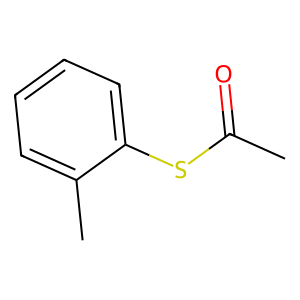
S-(2-methylphenyl) ethanethioate
Names and Identifiers of S-(2-methylphenyl) ethanethioate
CAS Number |
10436-57-4 |
|---|---|
IUPAC Name |
S-(2-methylphenyl) ethanethioate |
Canonical SMILES |
CC1=CC=CC=C1SC(=O)C |
Physical and chemical properties of S-(2-methylphenyl) ethanethioate
Boiling Point |
242.4ºC at 760mmHg |
|---|---|
Density |
1.1g/cm3 |
Exact Mass |
166.04500 |
Flash Point |
96.3ºC |
Index of Refraction |
1.563 |
LogP |
2.63360 |
Molecular Formula |
C9H10OS |
Molecular Weight |
166.24000 |
PSA |
42.37000 |
Vapour Pressure |
0.034mmHg at 25°C |
Applications of S-(2-methylphenyl) ethanethioate
S-(2-methylphenyl) ethanethioate finds applications in various fields:
- Organic Synthesis: It serves as a building block for synthesizing more complex organic molecules, particularly in pharmaceutical chemistry.
- Agricultural Chemistry: Compounds like this may be used in developing agrochemicals due to their potential biological activity.
- Flavor and Fragrance Industry: Thioesters are often utilized for their unique scents and flavors, making them valuable in cosmetic and food industries.
Interaction Studies of S-(2-methylphenyl) ethanethioate
Interaction studies involving S-(2-methylphenyl) ethanethioate focus on its reactivity with biological molecules. For instance:
- Enzymatic Reactions: Investigations have shown how thioesters interact with enzymes, influencing their catalytic activity.
- Binding Studies: The compound's ability to bind with proteins or other biomolecules is crucial for understanding its potential therapeutic effects.
These studies help elucidate the mechanisms through which S-(2-methylphenyl) ethanethioate exerts its biological effects and supports its application in drug development.
Biological Activity of S-(2-methylphenyl) ethanethioate
Research indicates that thioesters like S-(2-methylphenyl) ethanethioate may exhibit biological activity, particularly in the realm of pharmacology. Some studies suggest that compounds containing thioester linkages can demonstrate antimicrobial and anti-inflammatory properties. The biological activity often correlates with the structural features of the compound, such as the presence of substituents on the aromatic ring, which can influence its interaction with biological targets.
 Cas:137-06-4

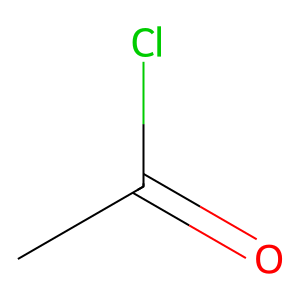 Cas:75-36-5

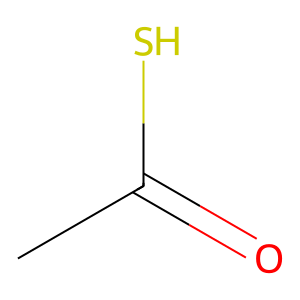 Cas:10387-40-3
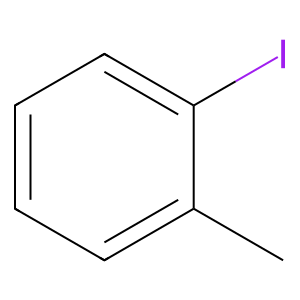 Cas:615-37-2
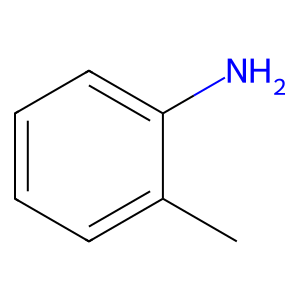 Cas:95-53-4