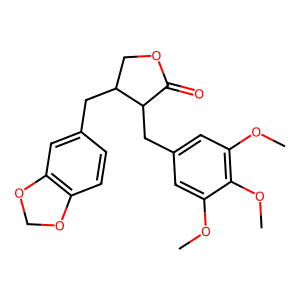
Yatein
Names and Identifiers of Yatein
CAS Number |
40456-50-6 |
|---|---|
IUPAC Name |
(3R,4R)-4-(1,3-benzodioxol-5-ylmethyl)-3-[(3,4,5-trimethoxyphenyl)methyl]oxolan-2-one |
InChI |
InChI=1S/C22H24O7/c1-24-19-9-14(10-20(25-2)21(19)26-3)7-16-15(11-27-22(16)23)6-13-4-5-17-18(8-13)29-12-28-17/h4-5,8-10,15-16H,6-7,11-12H2,1-3H3/t15-,16+/m0/s1 |
InChIKey |
GMLDZDDTZKXJLU-JKSUJKDBSA-N |
Canonical SMILES |
COC1=CC(=CC(=C1OC)OC)CC2C(COC2=O)CC3=CC4=C(C=C3)OCO4 |
Isomeric SMILES |
COC1=CC(=CC(=C1OC)OC)C[C@@H]2[C@H](COC2=O)CC3=CC4=C(C=C3)OCO4 |
Physical and chemical properties of Yatein
Boiling Point |
564.9±45.0 °C at 760 mmHg |
|---|---|
Density |
1.3±0.1 g/cm3 |
Exact Mass |
400.152191 |
Flash Point |
246.2±28.8 °C |
Index of Refraction |
1.577 |
LogP |
3.06 |
Molecular Formula |
C22H24O7 |
Molecular Weight |
400.422 |
PSA |
72.45000 |
Vapour Pressure |
0.0±1.5 mmHg at 25°C |
Applications of Yatein
Yatein has several promising applications:
- Pharmaceuticals: Due to its antiproliferative and antiviral properties, yatein is being researched for potential use in cancer therapies and antiviral medications.
- Nutraceuticals: Its antioxidant capabilities make it a candidate for dietary supplements aimed at reducing oxidative stress.
- Cosmetics: The compound's beneficial properties may also extend to skincare formulations aimed at combating skin aging and damage.
Interaction Studies of Yatein
Interaction studies have highlighted yatein's ability to modulate various biological pathways. Its inhibition of cytochrome P450 enzymes suggests a significant interaction with drug metabolism processes, potentially affecting the efficacy and safety profiles of co-administered drugs . Furthermore, studies on its antiproliferative effects indicate interactions with cellular signaling pathways involved in cancer cell growth and survival .
Biological Activity of Yatein
Yatein exhibits significant biological activity, particularly in the realm of cancer research. Studies have demonstrated that yatein can inhibit the proliferation of P3X murine myeloma cells, resulting in approximately 75% cell death . Furthermore, yatein has shown antiviral properties, specifically against herpes simplex virus type 1 (HSV-1), where it inhibits viral replication effectively .
The compound's antioxidant properties also contribute to its biological profile, making it a candidate for further investigation in therapeutic applications targeting oxidative stress-related diseases.
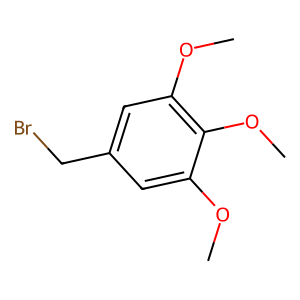 Cas:21852-50-6

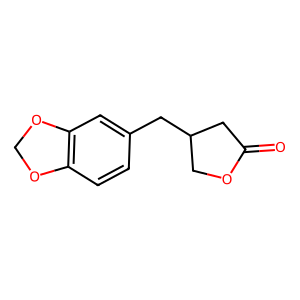 Cas:80483-34-7

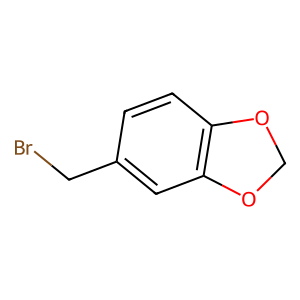 Cas:2606-51-1