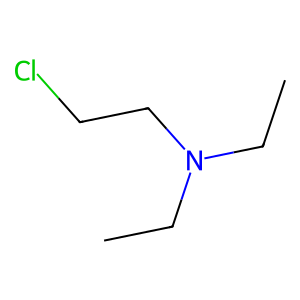
(2-Chloroethyl)diethylamine
Names and Identifiers of (2-Chloroethyl)diethylamine
CAS Number |
100-35-6 |
|---|---|
EC Number |
202-843-1 |
IUPAC Name |
2-chloro-N,N-diethylethanamine |
InChI |
InChI=1S/C6H14ClN/c1-3-8(4-2)6-5-7/h3-6H2,1-2H3 |
InChIKey |
YMDNODNLFSHHCV-UHFFFAOYSA-N |
Canonical SMILES |
CCN(CC)CCCl |
UNII |
BKE4K6N7IF |
Applications of (2-Chloroethyl)diethylamine
The primary applications of 2-chloro-N,N-diethylethanamine include:
- Cancer Research: Its ability to induce DNA damage makes it a valuable tool for studying mechanisms of synthetic lethality in cancer cells.
- Biochemical Studies: It serves as a reagent for modifying nucleobases and studying DNA repair mechanisms.
- Pharmaceutical Development: Potential use in developing new cancer therapies targeting specific genetic mutations.
Interaction Studies of (2-Chloroethyl)diethylamine
Interaction studies involving 2-chloro-N,N-diethylethanamine have primarily focused on its effects on DNA repair pathways. Research indicates that this compound can enhance the effects of PARP inhibitors by increasing DNA damage in cancer cells lacking functional PARP1 . Additionally, studies have shown that it may interact with other small molecules that target mismatched DNA or specific repair pathways, suggesting potential for combination therapies.
Biological Activity of (2-Chloroethyl)diethylamine
2-Chloro-N,N-diethylethanamine has demonstrated significant biological activity, particularly in cancer research. It has been shown to selectively kill PARP1-deficient tumor cells by inducing DNA damage that requires PARP1 for repair . This selective toxicity makes it a candidate for combination therapies with PARP inhibitors, enhancing the efficacy of existing cancer treatments. Additionally, it may interact with other DNA repair pathways, further complicating its biological profile and potential therapeutic applications.
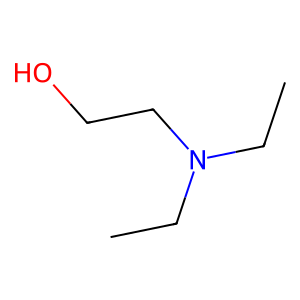 Cas:100-37-8

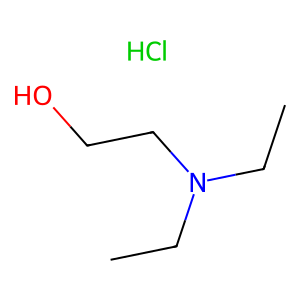 Cas:14426-20-1
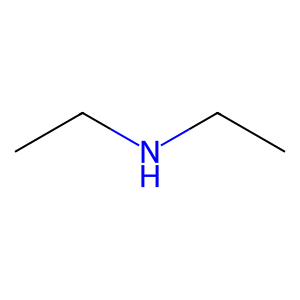 Cas:109-89-7