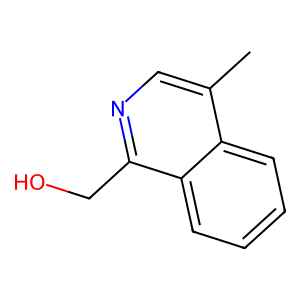
(4-Methylisoquinolin-1-yl)methanol
CAS No.:
35967-11-4
M. Wt:
173.21100
M. Fa:
C11H11NO
InChI Key:
BNFVEOHEPDSYKN-UHFFFAOYSA-N
Names and Identifiers of (4-Methylisoquinolin-1-yl)methanol
CAS Number |
35967-11-4 |
|---|---|
IUPAC Name |
(4-methylisoquinolin-1-yl)methanol |
InChI |
InChI=1S/C11H11NO/c1-8-6-12-11(7-13)10-5-3-2-4-9(8)10/h2-6,13H,7H2,1H3 |
InChIKey |
BNFVEOHEPDSYKN-UHFFFAOYSA-N |
Canonical SMILES |
CC1=CN=C(C2=CC=CC=C12)CO |
Physical and chemical properties of (4-Methylisoquinolin-1-yl)methanol
Exact Mass |
173.08400 |
|---|---|
LogP |
2.03550 |
Molecular Formula |
C11H11NO |
Molecular Weight |
173.21100 |
PSA |
33.12000 |
Applications of (4-Methylisoquinolin-1-yl)methanol
(4-Methylisoquinolin-1-yl)methanol has various applications in:
- Pharmaceutical Development: Its potential biological activities make it a candidate for drug development in treating infections and cancers.
- Chemical Research: It serves as a building block for synthesizing more complex organic molecules in medicinal chemistry.
Interaction Studies of (4-Methylisoquinolin-1-yl)methanol
Studies on (4-Methylisoquinolin-1-yl)methanol often focus on its interactions with biological targets. Research indicates that it may interact with specific receptors or enzymes involved in disease pathways, which could enhance its therapeutic efficacy. Detailed interaction studies are crucial for understanding its mechanism of action and optimizing its pharmacological profile.
Biological Activity of (4-Methylisoquinolin-1-yl)methanol
Isoquinoline derivatives, including (4-Methylisoquinolin-1-yl)methanol, have been studied for their diverse biological activities. They exhibit potential pharmacological effects, including:
- Antimicrobial Activity: Some isoquinoline derivatives show effectiveness against various bacterial strains.
- Anticancer Properties: Research indicates that these compounds may possess cytotoxic effects on cancer cell lines.
- Neuroprotective Effects: Certain studies suggest that isoquinoline derivatives can protect neuronal cells from oxidative stress.