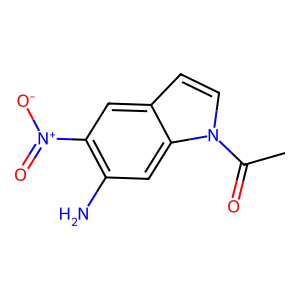
1-(6-amino-5-nitroindol-1-yl)ethanone
CAS No.:
1000343-09-8
M. Wt:
219.197
M. Fa:
C10H9N3O3
InChI Key:
-
Names and Identifiers of 1-(6-amino-5-nitroindol-1-yl)ethanone
CAS Number |
1000343-09-8 |
|---|---|
IUPAC Name |
1-(6-azanyl-5-nitro-indol-1-yl)ethanone |
Canonical SMILES |
CC(=O)N1C=CC2=CC(=C(C=C21)N)[N+](=O)[O-] |
Physical and chemical properties of 1-(6-amino-5-nitroindol-1-yl)ethanone
Boiling Point |
428.3±25.0 °C at 760 mmHg |
|---|---|
Density |
1.5±0.1 g/cm3 |
Exact Mass |
219.064392 |
Flash Point |
212.8±23.2 °C |
Index of Refraction |
1.689 |
LogP |
1.79 |
Molecular Formula |
C10H9N3O3 |
Molecular Weight |
219.197 |
PSA |
93.84000 |
Vapour Pressure |
0.0±1.0 mmHg at 25°C |
Interaction Studies of 1-(6-amino-5-nitroindol-1-yl)ethanone
Interaction studies involving 1-(6-Amino-5-nitro-1H-indol-1-yl)ethanone focus on:
- Enzyme Inhibition: Investigating its role as an inhibitor for enzymes like xanthine oxidase, which is relevant for gout treatment.
- Receptor Binding Studies: Understanding how this compound interacts with specific biological receptors can provide insights into its therapeutic potential.
Biological Activity of 1-(6-amino-5-nitroindol-1-yl)ethanone
Indole derivatives, including 1-(6-Amino-5-nitro-1H-indol-1-yl)ethanone, exhibit a wide range of biological activities:
- Anticancer Activity: Indole compounds have been reported to inhibit cancer cell proliferation and induce apoptosis.
- Antimicrobial Properties: Some indole derivatives show activity against various bacterial and fungal strains.
- Neuroprotective Effects: Certain studies suggest potential benefits in neurodegenerative conditions due to their ability to modulate neurotransmitter systems.