
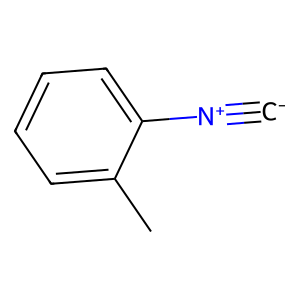
1-Ethyl-2-isocyanobenzene
Names and Identifiers of 1-Ethyl-2-isocyanobenzene
CAS Number |
63212-32-8 |
|---|---|
EC Number |
860-404-5 |
IUPAC Name |
1-ethyl-2-isocyanobenzene |
InChI |
InChI=1S/C9H9N/c1-3-8-6-4-5-7-9(8)10-2/h4-7H,3H2,1H3 |
InChIKey |
URRLGKSRAQOOIV-UHFFFAOYSA-N |
Canonical SMILES |
CCC1=CC=CC=C1[N+]#[C-] |
Physical and chemical properties of 1-Ethyl-2-isocyanobenzene
Exact Mass |
131.07300 |
|---|---|
LogP |
2.03050 |
Molecular Formula |
C9H9N |
Molecular Weight |
131.17400 |
Safety Information of 1-Ethyl-2-isocyanobenzene

Applications of 1-Ethyl-2-isocyanobenzene
1-Ethyl-2-isocyanobenzene finds applications across various fields:
- Chemical Research: It serves as a building block in synthesizing complex organic molecules and as a reagent in numerous organic reactions.
- Biological Studies: The compound is investigated for its potential biological activity and utility in synthesizing bioactive molecules.
- Pharmaceutical Development: Ongoing research explores its role as a precursor for pharmaceuticals.
- Industrial Use: It is employed in producing specialty chemicals and materials.
Interaction Studies of 1-Ethyl-2-isocyanobenzene
Studies have highlighted interactions between 1-ethyl-2-isocyanobenzene and metalloproteins. Isocyanides have been shown to interact with cytochrome P450 enzymes, influencing their catalytic activity. Such interactions are crucial for understanding the compound's potential effects on biological systems and its utility in medicinal chemistry.
Biological Activity of 1-Ethyl-2-isocyanobenzene
Research indicates that 1-ethyl-2-isocyanobenzene exhibits potential biological activity. Isocyanides, in general, have been studied for their antibacterial, antifungal, antimalarial, antiviral, and antitumoral properties. Specific studies have shown that isocyanides can inhibit various biological pathways, making them candidates for drug development and therapeutic applications.
 Cas:10468-64-1

 Cas:74-88-4
