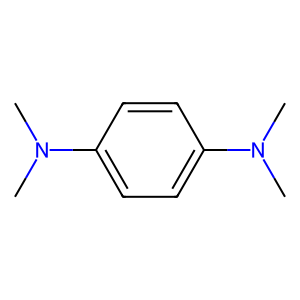
N,N,N',N'-Tetramethyl-P-phenylenediamine
CAS No.:
100-22-1
M. Wt:
164.25
M. Fa:
C10H16N2
InChI Key:
CJAOGUFAAWZWNI-UHFFFAOYSA-N
Appearance:
Gray Solid
Names and Identifiers of 100-22-1
CAS Number |
100-22-1 |
|---|---|
EC Number |
202-831-6 |
MDL Number |
MFCD00008309 |
IUPAC Name |
1-N,1-N,4-N,4-N-tetramethylbenzene-1,4-diamine |
InChI |
InChI=1S/C10H16N2/c1-11(2)9-5-7-10(8-6-9)12(3)4/h5-8H,1-4H3 |
InChIKey |
CJAOGUFAAWZWNI-UHFFFAOYSA-N |
Canonical SMILES |
CN(C)C1=CC=C(C=C1)N(C)C |
UNII |
P4P3AC32ZB |
UNSPSC Code |
12352100 |
Physical and chemical properties of 100-22-1
Acidity coefficient |
5.92±0.12(Predicted) |
|---|---|
Boiling Point |
500 °F at 760 mmHg (NTP, 1992) |
BRN |
1564025 |
Density |
1.0±0.1 g/cm3 |
Exact Mass |
164.131348 |
Flash Point |
greater than 235 °F (NTP, 1992) |
Index of Refraction |
1.578 |
LogP |
2.08 |
Melting Point |
120 to 124 °F (NTP, 1992) |
Merck |
14,9228 |
Molecular Formula |
C10H16N2 |
Molecular Weight |
164.25 |
PSA |
6.48000 |
Sensitivity |
Air & Light Sensitive |
Solubility |
less than 1 mg/mL at 70 °F (NTP, 1992) |
Stability |
Stable, but may be air or light sensitive. Combustible. Incompatible with acids, acid chlorides, acid anhydrides, oxidizing agents. |
Storage condition |
Store below +30°C. |
Vapour Pressure |
0.07 [mmHg] |
Water Solubility |
slightly in cold, more in hot water |
Safety Information of 100-22-1

Applications of 100-22-1
N,N,N',N'-Tetramethyl-p-phenylenediamine dihydrochloride has a broad range of applications:
- Biochemical Assays: Utilized as a substrate for detecting peroxidase activity in various biological samples.
- Microbiology: Acts as a test reagent for identifying cytochrome oxidase-positive organisms.
- Histochemistry: Employed in staining techniques to visualize enzyme activity on gels.
- Analytical Chemistry: Used in spectrophotometric assays due to its colorimetric properties upon oxidation.
Interaction Studies of 100-22-1
Studies involving N,N,N',N'-tetramethyl-p-phenylenediamine often focus on its interactions with various biological molecules:
- Enzyme Interactions: Research has demonstrated its interaction with heme peroxidases, highlighting its role as an electron donor.
- Radical Formation Studies: Investigations into its ability to form radical species have implications for understanding oxidative stress and antioxidant mechanisms within biological systems.
Biological Activity of 100-22-1
The biological activity of N,N,N',N'-tetramethyl-p-phenylenediamine is primarily linked to its role as a co-substrate for heme peroxidases. It has been utilized in microbiological assays to identify and differentiate between various microbial species based on their cytochrome oxidase activity. The compound's ability to donate electrons makes it an essential tool in biochemical research, particularly in studying oxidative stress and enzymatic functions.
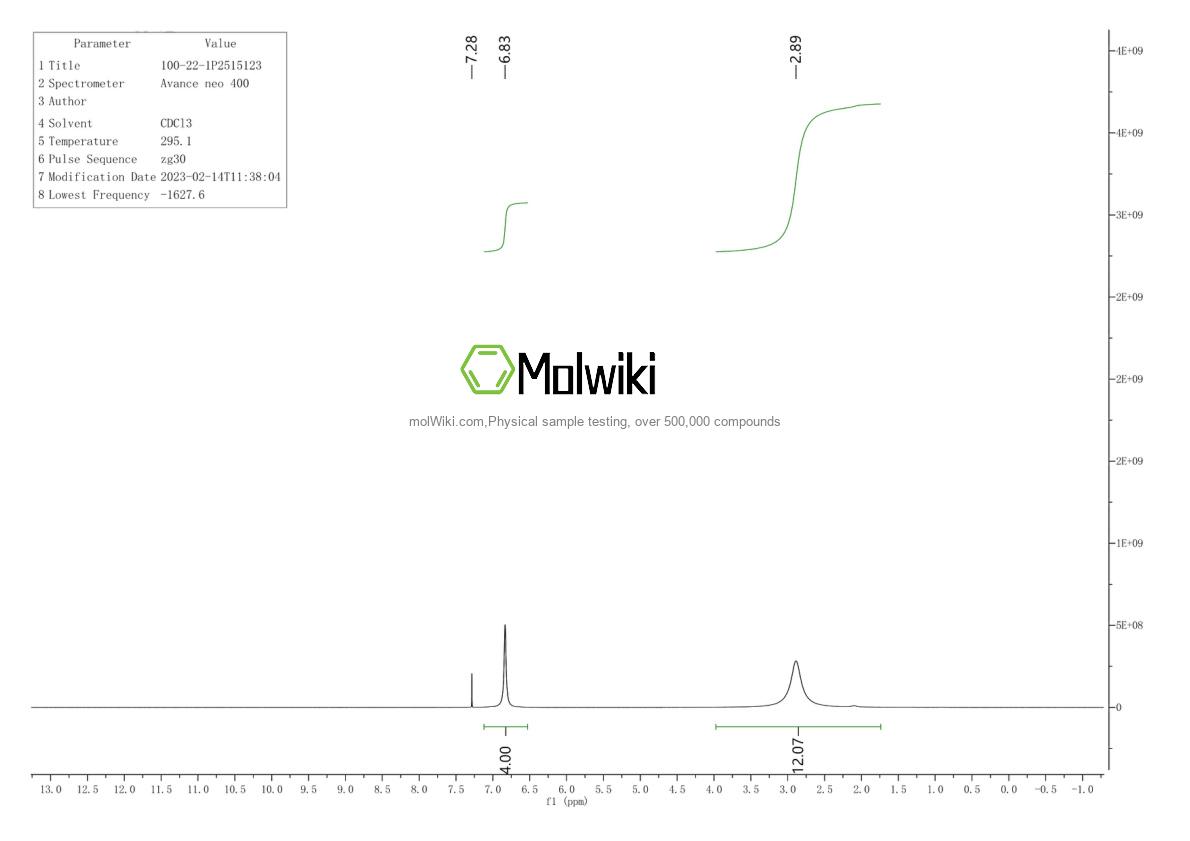
Physical sample testing spectrum (NMR) of 100-22-1

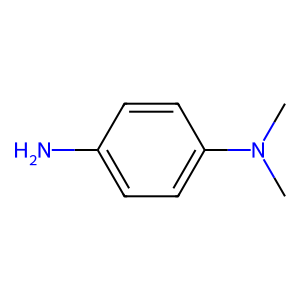 Cas:99-98-9

 Cas:150-75-4
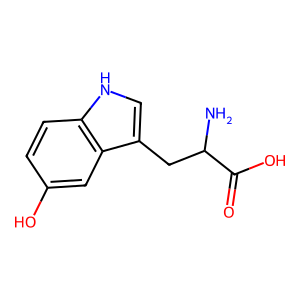 Cas:56-69-9