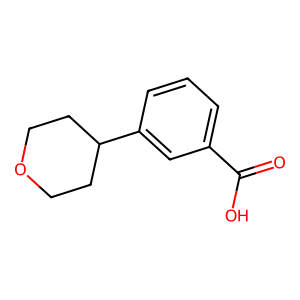
3-(tetrahydro-2H-pyran-4-yl)benzoic acid
CAS No.:
1000016-93-2
M. Wt:
206.23800
M. Fa:
C12H14O3
InChI Key:
RIOUZDXMFBINOG-UHFFFAOYSA-N
Names and Identifiers of 1000016-93-2
CAS Number |
1000016-93-2 |
|---|---|
EC Number |
853-390-7 |
IUPAC Name |
3-(oxan-4-yl)benzoic acid |
InChI |
InChI=1S/C12H14O3/c13-12(14)11-3-1-2-10(8-11)9-4-6-15-7-5-9/h1-3,8-9H,4-7H2,(H,13,14) |
InChIKey |
RIOUZDXMFBINOG-UHFFFAOYSA-N |
Canonical SMILES |
C1COCCC1C2=CC(=CC=C2)C(=O)O |
Physical and chemical properties of 1000016-93-2
Exact Mass |
206.09400 |
|---|---|
LogP |
2.27880 |
Molecular Formula |
C12H14O3 |
Molecular Weight |
206.23800 |
PSA |
46.53000 |
Safety Information of 1000016-93-2

Applications of 1000016-93-2
3-(Tetrahydro-2H-pyran-4-yl)benzoic acid has several notable applications:
- Pharmaceuticals: Its derivatives may be explored for their potential therapeutic effects, particularly in anti-infective and anti-inflammatory drugs.
- Chemical Intermediates: It serves as an important intermediate in the synthesis of more complex organic compounds.
- Agricultural Chemicals: The compound may find use in developing agrochemicals due to its biological activity against pests and pathogens.
Interaction Studies of 1000016-93-2
Studies on the interactions of 3-(tetrahydro-2H-pyran-4-yl)benzoic acid with various biological targets are essential for understanding its mechanism of action:
- Protein Binding Studies: Investigating how this compound binds to proteins can provide insights into its pharmacokinetics and potential therapeutic effects.
- Enzyme Inhibition: Understanding whether it inhibits specific enzymes can help elucidate its role in biological pathways and inform drug development strategies.
Biological Activity of 1000016-93-2
Research indicates that 3-(tetrahydro-2H-pyran-4-yl)benzoic acid exhibits various biological activities, including:
- Antimicrobial Activity: Some derivatives of benzoic acid have demonstrated antimicrobial properties, suggesting potential applications in treating infections.
- Anti-inflammatory Effects: Compounds with similar structures have been studied for their anti-inflammatory properties, indicating that this compound may also possess such activity.
- Analgesic Properties: There is evidence that certain benzoic acid derivatives can act as analgesics, providing pain relief in various contexts.