![structure of 5-Chloroimidazo[1,2-a]pyridine-2-carboxylic acid](https://molwiki.oss-cn-hongkong.aliyuncs.com/structure/93/1000017-93-5.svg)
5-Chloroimidazo[1,2-a]pyridine-2-carboxylic acid
CAS No.:
1000017-93-5
M. Wt:
196.59000
M. Fa:
C8H5ClN2O2
InChI Key:
TVUHAHMCORHJBN-UHFFFAOYSA-N
Names and Identifiers of 1000017-93-5
CAS Number |
1000017-93-5 |
|---|---|
MDL Number |
MFCD09836168 |
IUPAC Name |
5-chloroimidazo[1,2-a]pyridine-2-carboxylic acid |
InChI |
InChI=1S/C8H5ClN2O2/c9-6-2-1-3-7-10-5(8(12)13)4-11(6)7/h1-4H,(H,12,13) |
InChIKey |
TVUHAHMCORHJBN-UHFFFAOYSA-N |
Canonical SMILES |
C1=CC2=NC(=CN2C(=C1)Cl)C(=O)O |
UNSPSC Code |
12352100 |
Physical and chemical properties of 1000017-93-5
Exact Mass |
196.00400 |
|---|---|
LogP |
1.68590 |
Melting Point |
140-142℃ |
Molecular Formula |
C8H5ClN2O2 |
Molecular Weight |
196.59000 |
PSA |
54.60000 |
Safety Information of 1000017-93-5

Applications of 1000017-93-5
5-Chloroimidazo[1,2-a]pyridine-2-carboxylic acid has several potential applications:
- Pharmaceutical Development: Its derivatives are being explored for their therapeutic potential in treating infections and cancers.
- Chemical Probes: It can serve as a chemical probe in biological studies to understand enzyme mechanisms or cellular processes.
- Material Science: Its unique properties may find applications in developing novel materials or coatings.
Interaction Studies of 1000017-93-5
Interaction studies involving 5-Chloroimidazo[1,2-a]pyridine-2-carboxylic acid focus on its binding affinity with various biological targets:
- Protein-Ligand Binding: Investigations into how this compound interacts with specific proteins can provide insights into its mechanism of action against diseases.
- Molecular Docking Studies: Computational studies have been conducted to predict how well this compound binds to target enzymes or receptors, aiding in drug design efforts.
Biological Activity of 1000017-93-5
Research indicates that 5-Chloroimidazo[1,2-a]pyridine-2-carboxylic acid exhibits significant biological activities:
- Antimicrobial Activity: Compounds with similar structures have shown effectiveness against various bacterial strains.
- Anticancer Potential: Studies suggest that derivatives of this compound may inhibit cancer cell proliferation, particularly in certain types of tumors such as lung and renal cancers.
- Enzyme Inhibition: It may act as an inhibitor for specific enzymes involved in disease pathways.
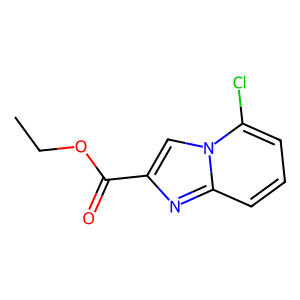 Cas:67625-36-9
