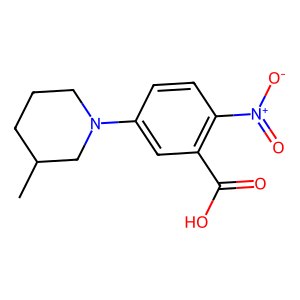
5-(3-Methylpiperidin-1-yl)-2-nitrobenzoic acid
CAS No.:
1000018-45-0
M. Wt:
264.277
M. Fa:
C13H16N2O4
InChI Key:
-
Names and Identifiers of 1000018-45-0
CAS Number |
1000018-45-0 |
|---|---|
IUPAC Name |
5-(3-methylpiperidin-1-yl)-2-nitro-benzoic acid |
Canonical SMILES |
CC1CCCN(C1)C2=CC(=C(C=C2)[N+](=O)[O-])C(=O)O |
Physical and chemical properties of 1000018-45-0
Boiling Point |
482.4±40.0 °C at 760 mmHg |
|---|---|
Density |
1.3±0.1 g/cm3 |
Exact Mass |
264.110992 |
Flash Point |
245.6±27.3 °C |
Index of Refraction |
1.587 |
LogP |
3.53 |
Molecular Formula |
C13H16N2O4 |
Molecular Weight |
264.277 |
Vapour Pressure |
0.0±1.3 mmHg at 25°C |
Applications of 1000018-45-0
5-(3-Methylpiperidin-1-yl)-2-nitrobenzoic acid finds applications in several areas:
- Pharmaceutical Development: Its biological activities make it a candidate for drug development, particularly in antimicrobial and anticancer therapies.
- Chemical Research: Used as a reagent or intermediate in organic synthesis.
- Proteomics Research: It is utilized in studies involving protein interactions and modifications due to its ability to influence biological systems.
Interaction Studies of 1000018-45-0
Interaction studies of 5-(3-Methylpiperidin-1-yl)-2-nitrobenzoic acid focus on its binding affinity with various biological targets. These studies often involve:
- In vitro assays to assess its interaction with specific enzymes or receptors.
- Molecular docking studies to predict binding modes and affinities with target proteins.
- Cell-based assays to evaluate the functional consequences of these interactions on cellular processes, such as proliferation or apoptosis.
Such investigations are crucial for understanding its mechanism of action and therapeutic potential.
Biological Activity of 1000018-45-0
Research indicates that 5-(3-Methylpiperidin-1-yl)-2-nitrobenzoic acid exhibits various biological activities, including:
- Antimicrobial Properties: It has shown effectiveness against certain bacterial strains.
- Antitumor Activity: Preliminary studies suggest potential cytotoxic effects on cancer cell lines, making it a candidate for further investigation in cancer therapy.
- Neuropharmacological Effects: Due to the piperidine structure, it may interact with neurotransmitter systems, warranting exploration in neuropharmacology.