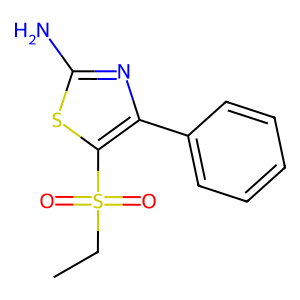
2-Amino-5-ethylsulfonyl-4-phenyl-1,3-thiazole
CAS No.:
1000018-52-9
M. Wt:
268.35500
M. Fa:
C11H12N2O2S2
InChI Key:
BSQNFSFLIVVYJJ-UHFFFAOYSA-N
Names and Identifiers of 1000018-52-9
CAS Number |
1000018-52-9 |
|---|---|
MDL Number |
MFCD09743737 |
IUPAC Name |
5-ethylsulfonyl-4-phenyl-1,3-thiazol-2-amine |
InChI |
InChI=1S/C11H12N2O2S2/c1-2-17(14,15)10-9(13-11(12)16-10)8-6-4-3-5-7-8/h3-7H,2H2,1H3,(H2,12,13) |
InChIKey |
BSQNFSFLIVVYJJ-UHFFFAOYSA-N |
Canonical SMILES |
CCS(=O)(=O)C1=C(C2=CC=CC=C2)N=C(N)S1 |
UNSPSC Code |
12352100 |
Physical and chemical properties of 1000018-52-9
Exact Mass |
268.03400 |
|---|---|
LogP |
3.84790 |
Molecular Formula |
C11H12N2O2S2 |
Molecular Weight |
268.35500 |
PSA |
109.67000 |
Safety Information of 1000018-52-9

Applications of 1000018-52-9
2-Amino-5-ethylsulfonyl-4-phenyl-1,3-thiazole has potential applications in various fields:
- Pharmaceutical Development: Due to its biological activity, it may serve as a lead compound in drug discovery.
- Agricultural Chemistry: Its antimicrobial properties could be explored for use in agricultural fungicides or bactericides.
- Material Science: Potential applications in developing novel materials with specific electronic or optical properties.
Interaction Studies of 1000018-52-9
Interaction studies involving 2-amino-5-ethylsulfonyl-4-phenyl-1,3-thiazole focus on its binding affinity with biological targets:
- Protein Binding Studies: Understanding how this compound interacts with specific proteins can provide insights into its mechanism of action.
- Enzyme Inhibition Assays: Evaluating its ability to inhibit key enzymes involved in disease pathways can help assess its therapeutic potential.
These studies are crucial for elucidating the pharmacodynamics and pharmacokinetics of the compound.
Biological Activity of 1000018-52-9
Research has indicated that compounds containing thiazole rings exhibit a range of biological activities, including:
- Antimicrobial Properties: Thiazole derivatives have shown potential against various bacterial and fungal strains.
- Antioxidant Activity: Some studies suggest that these compounds can scavenge free radicals, contributing to their antioxidant properties.
- Anti-inflammatory Effects: Compounds similar to 2-amino-5-ethylsulfonyl-4-phenyl-1,3-thiazole have been evaluated for their ability to inhibit inflammatory pathways.
These biological activities make this compound a candidate for further pharmacological studies.