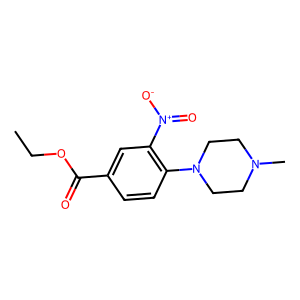
Ethyl 4-(4-methylpiperazin-1-yl)-3-nitrobenzoate
CAS No.:
1000018-71-2
M. Wt:
293.31800
M. Fa:
C14H19N3O4
InChI Key:
-
Names and Identifiers of 1000018-71-2
CAS Number |
1000018-71-2 |
|---|---|
IUPAC Name |
ethyl 4-(4-methylpiperazin-1-yl)-3-nitro-benzoate |
Canonical SMILES |
CCOC(=O)C1=CC(=C(C=C1)N2CCN(CC2)C)[N+](=O)[O-] |
Physical and chemical properties of 1000018-71-2
Exact Mass |
293.13800 |
|---|---|
LogP |
2.04940 |
Melting Point |
73-74 |
Molecular Formula |
C14H19N3O4 |
Molecular Weight |
293.31800 |
PSA |
78.60000 |
Applications of 1000018-71-2
Ethyl 4-(4-methylpiperazin-1-yl)-3-nitrobenzoate has potential applications in various fields:
- Pharmaceutical Development: Its unique structure may lead to the development of new drugs targeting bacterial infections or cancer.
- Chemical Research: Used as a precursor for synthesizing other complex molecules in organic chemistry.
- Agricultural Chemistry: Potential use as a pesticide or herbicide due to its biological activity.
Interaction Studies of 1000018-71-2
Studies on Ethyl 4-(4-methylpiperazin-1-yl)-3-nitrobenzoate's interactions with biological systems are crucial for understanding its pharmacological profile. Key areas of interest include:
- Receptor Binding Studies: Investigating how this compound interacts with specific receptors in the central nervous system.
- Enzyme Inhibition Assays: Assessing its ability to inhibit enzymes related to disease pathways.
- Toxicological Assessments: Evaluating its safety profile and potential side effects in biological systems.
Biological Activity of 1000018-71-2
Preliminary studies suggest that compounds similar to Ethyl 4-(4-methylpiperazin-1-yl)-3-nitrobenzoate exhibit various biological activities, including:
- Antimicrobial Properties: Many derivatives of nitrobenzoates have shown effectiveness against bacterial strains.
- Antitumor Activity: Certain piperazine derivatives are known for their cytotoxic effects on cancer cell lines.
- Neuropharmacological Effects: Compounds containing piperazine rings often interact with neurotransmitter systems, indicating potential use in treating neurological disorders.