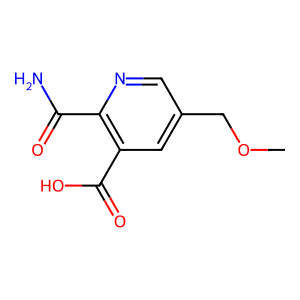
2-carbamoyl-5-(methoxymethyl)pyridine-3-carboxylic acid
Names and Identifiers of 1000298-37-2
CAS Number |
1000298-37-2 |
|---|---|
IUPAC Name |
2-aminocarbonyl-5-(methoxymethyl)pyridine-3-carboxylic acid |
Canonical SMILES |
COCC1=CC(=C(N=C1)C(=O)N)C(=O)O |
Physical and chemical properties of 1000298-37-2
Molecular Formula |
C9H10N2O4 |
|---|---|
Molecular Weight |
210.19 |
Safety Information of 1000298-37-2

Applications of 1000298-37-2
2-Carbamoyl-5-(methoxymethyl)pyridine-3-carboxylic acid has potential applications in:
- Pharmaceuticals: As a precursor for developing new drugs targeting specific diseases.
- Agriculture: Possible use as an agrochemical for pest control or plant growth regulation.
- Materials Science: Utilization in synthesizing polymers or other materials due to its functional groups.
Interaction Studies of 1000298-37-2
Interaction studies involving 2-Carbamoyl-5-(methoxymethyl)pyridine-3-carboxylic acid focus on its behavior in biological systems, particularly its binding affinity to various receptors. Understanding these interactions is essential for predicting its pharmacological effects and optimizing its use in therapeutic applications.
Biological Activity of 1000298-37-2
Research indicates that derivatives of pyridine compounds, including 2-Carbamoyl-5-(methoxymethyl)pyridine-3-carboxylic acid, may exhibit various biological activities. These include:
- Antimicrobial properties: Potential effectiveness against certain pathogens.
- Cannabinoid receptor activity: Some pyridine derivatives have shown agonistic activity at cannabinoid receptors, suggesting potential therapeutic uses in pain management and other conditions.
The exact biological profile of 2-Carbamoyl-5-(methoxymethyl)pyridine-3-carboxylic acid requires further investigation to establish its efficacy and safety.