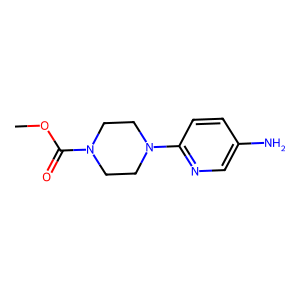
Methyl 4-(5-aminopyridin-2-yl)piperazine-1-carboxylate
CAS No.:
1000334-84-8
M. Wt:
236.27
M. Fa:
C11H16N4O2
InChI Key:
NRPXKBOIJYIOFA-UHFFFAOYSA-N
Names and Identifiers of 1000334-84-8
CAS Number |
1000334-84-8 |
|---|---|
IUPAC Name |
methyl 4-(5-aminopyridin-2-yl)piperazine-1-carboxylate |
InChI |
InChI=1S/C11H16N4O2/c1-17-11(16)15-6-4-14(5-7-15)10-3-2-9(12)8-13-10/h2-3,8H,4-7,12H2,1H3 |
InChIKey |
NRPXKBOIJYIOFA-UHFFFAOYSA-N |
Canonical SMILES |
COC(=O)N1CCN(CC1)C2=NC=C(C=C2)N |
Physical and chemical properties of 1000334-84-8
Molecular Formula |
C11H16N4O2 |
|---|---|
Molecular Weight |
236.27 |
Applications of 1000334-84-8
Methyl 4-(5-aminopyridin-2-yl)piperazine-1-carboxylate has several potential applications:
- Pharmaceutical Development: Due to its biological activity, it is being explored for the development of new therapeutics targeting infections and cancer.
- Chemical Research: As a versatile building block in organic synthesis, it can be used to create more complex molecules for research purposes.
- Biochemical Studies: It serves as a tool in studying biological pathways involving neurotransmitters and other signaling molecules.
Interaction Studies of 1000334-84-8
Research into the interactions of methyl 4-(5-aminopyridin-2-yl)piperazine-1-carboxylate with biological macromolecules is ongoing. Preliminary studies suggest that its piperazine moiety enhances binding affinity to certain receptors in the central nervous system and may modulate their activity. Further investigations are needed to elucidate its precise mechanisms of action and potential side effects.
Biological Activity of 1000334-84-8
Piperazine derivatives, including methyl 4-(5-aminopyridin-2-yl)piperazine-1-carboxylate, are known for their wide range of biological activities. This compound has shown potential in:
- Antimicrobial Activity: Exhibiting effects against various bacterial strains.
- Antitumor Properties: Some studies suggest it may inhibit tumor growth through specific mechanisms targeting cancer cells.
- Neuropharmacological Effects: It may influence neurotransmitter systems, making it a candidate for neurological research.