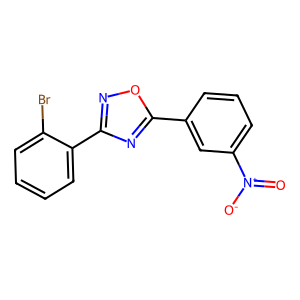
3-(2-Bromophenyl)-5-(3-nitrophenyl)-1,2,4-oxadiazole
CAS No.:
1000339-27-4
M. Wt:
346.13600
M. Fa:
C14H8BrN3O3
InChI Key:
-
Names and Identifiers of 1000339-27-4
CAS Number |
1000339-27-4 |
|---|---|
IUPAC Name |
3-(2-bromophenyl)-5-(3-nitrophenyl)-1,2,4-oxadiazole |
Canonical SMILES |
C1=CC=C(C(=C1)C2=NOC(=N2)C3=CC(=CC=C3)[N+](=O)[O-])Br |
Physical and chemical properties of 1000339-27-4
Exact Mass |
344.97500 |
|---|---|
LogP |
4.59750 |
Molecular Formula |
C14H8BrN3O3 |
Molecular Weight |
346.13600 |
PSA |
84.74000 |
Applications of 1000339-27-4
3-(2-Bromophenyl)-5-(3-nitrophenyl)-1,2,4-oxadiazole has potential applications in various fields:
- Pharmaceuticals: Due to its anticancer properties, it serves as a scaffold for developing new anticancer drugs.
- Material Science: Its unique structure may also find applications in creating novel materials with specific electronic or optical properties.
Interaction Studies of 1000339-27-4
Interaction studies involving 3-(2-Bromophenyl)-5-(3-nitrophenyl)-1,2,4-oxadiazole often utilize molecular docking techniques to predict binding affinities with target proteins. For example:
- Estrogen Receptor Binding: Molecular docking studies have suggested that related compounds effectively bind to estrogen receptors, which is significant for breast cancer therapeutics.
- Toxicity Predictions: In silico methods are used to predict toxicity profiles based on ADME (absorption, distribution, metabolism, and excretion) parameters.
Biological Activity of 1000339-27-4
Research indicates that compounds similar to 3-(2-Bromophenyl)-5-(3-nitrophenyl)-1,2,4-oxadiazole exhibit significant biological activities. For instance:
- Anticancer Activity: Studies have shown that oxadiazole derivatives can inhibit cancer cell proliferation. Specifically, some derivatives have demonstrated cytotoxic effects against breast cancer cell lines by inducing apoptosis and inhibiting key enzymes involved in cancer progression.
- Enzyme Inhibition: These compounds have been found to inhibit various enzymes such as carbonic anhydrases and histone deacetylases, which are critical in numerous biological processes.