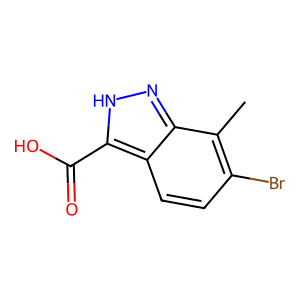
6-Bromo-7-methyl-1H-indazole-3-carboxylic acid
CAS No.:
1000340-71-5
M. Wt:
255.068
M. Fa:
C9H7BrN2O2
InChI Key:
ULINCJQNTOFFNO-UHFFFAOYSA-N
Names and Identifiers of 1000340-71-5
CAS Number |
1000340-71-5 |
|---|---|
MDL Number |
MFCD30365291 |
IUPAC Name |
6-bromo-7-methyl-2H-indazole-3-carboxylic acid |
InChI |
InChI=1S/C9H7BrN2O2/c1-4-6(10)3-2-5-7(4)11-12-8(5)9(13)14/h2-3H,1H3,(H,11,12)(H,13,14) |
InChIKey |
ULINCJQNTOFFNO-UHFFFAOYSA-N |
Canonical SMILES |
CC1=C(C=CC2=C(NN=C12)C(=O)O)Br |
UNSPSC Code |
12352100 |
Physical and chemical properties of 1000340-71-5
Acidity coefficient |
2.86±0.10(Predicted) |
|---|---|
Boiling Point |
492.4±40.0 °C at 760 mmHg |
Density |
1.8±0.1 g/cm3 |
Exact Mass |
253.969086 |
Flash Point |
251.6±27.3 °C |
H Bond Acceptors |
3 |
H Bond Donors |
2 |
Index of Refraction |
1.733 |
LogP |
2.53 |
Molecular Formula |
C9H7BrN2O2 |
Molecular Weight |
255.068 |
PSA |
65.98000 |
Vapour Pressure |
0.0±1.3 mmHg at 25°C |
Safety Information of 1000340-71-5

Applications of 1000340-71-5
6-Bromo-7-methyl-1H-indazole-3-carboxylic acid has various applications:
- Pharmaceutical Development: Its potential as an antitumor and antimicrobial agent makes it valuable in drug discovery and development.
- Research Tool: It serves as a reference standard in biochemical assays and pharmacological testing.
- Chemical Synthesis: The compound can act as an intermediate in synthesizing more complex molecules within medicinal chemistry .
Interaction Studies of 1000340-71-5
Interaction studies involving 6-bromo-7-methyl-1H-indazole-3-carboxylic acid focus on its binding affinity and inhibitory effects on target proteins or enzymes. Preliminary data suggest:
- Protein Binding: Investigations into how this compound interacts with specific proteins could elucidate its mechanism of action.
- Synergistic Effects: Studies may explore whether combining this compound with other drugs enhances therapeutic efficacy against particular diseases .
Biological Activity of 1000340-71-5
6-Bromo-7-methyl-1H-indazole-3-carboxylic acid has shown promising biological activities in preliminary studies. It is believed to possess:
- Antitumor Properties: Some studies suggest that compounds within the indazole family exhibit anticancer effects, possibly through mechanisms involving apoptosis or cell cycle arrest.
- Antimicrobial Activity: The compound may demonstrate efficacy against certain bacterial strains, making it a candidate for further investigation in antimicrobial drug development.
- Enzyme Inhibition: There is potential for this compound to act as an inhibitor of specific enzymes involved in metabolic pathways, which could have implications for treating various diseases .