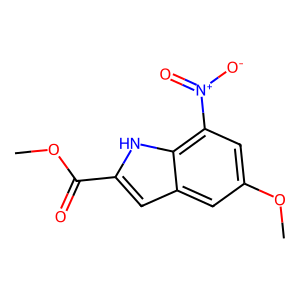
5-METHOXY-7-NITRO-2-INDOLECARBOXYLIC ACID METHYL ESTER
Names and Identifiers of 1000341-42-3
CAS Number |
1000341-42-3 |
|---|---|
IUPAC Name |
methyl 5-methoxy-7-nitro-1H-indole-2-carboxylate |
Canonical SMILES |
COC1=CC(=C2C(=C1)C=C(N2)C(=O)OC)[N+](=O)[O-] |
Physical and chemical properties of 1000341-42-3
Boiling Point |
467.1±40.0 °C at 760 mmHg |
|---|---|
Density |
1.4±0.1 g/cm3 |
Exact Mass |
250.058975 |
Flash Point |
236.3±27.3 °C |
Index of Refraction |
1.643 |
LogP |
3.18 |
Molecular Formula |
C11H10N2O5 |
Molecular Weight |
250.208 |
PSA |
97.14000 |
Vapour Pressure |
0.0±1.2 mmHg at 25°C |
Applications of 1000341-42-3
Methyl 5-methoxy-7-nitro-1H-indole-2-carboxylate has several applications, primarily in pharmaceutical research:
- Precursor for Melatoninergic Ligands: It serves as a starting material for synthesizing melatonin receptor ligands that may have therapeutic applications in sleep disorders and mood regulation.
- Research Tool: Its unique structure makes it valuable in studying receptor interactions and drug design related to circadian rhythm modulation.
Interaction Studies of 1000341-42-3
Interaction studies have shown that methyl 5-methoxy-7-nitro-1H-indole-2-carboxylate interacts specifically with melatonin receptors, influencing various physiological processes such as sleep induction and modulation of circadian rhythms. These interactions are critical for understanding its potential therapeutic effects and mechanisms of action.
Biological Activity of 1000341-42-3
Research indicates that methyl 5-methoxy-7-nitro-1H-indole-2-carboxylate exhibits significant biological activity, particularly as a melatonin receptor ligand. It has been shown to interact with melatonin receptors (MT1 and MT2), which are implicated in regulating circadian rhythms and sleep patterns. Additionally, compounds in this class have been associated with anti-inflammatory, antioxidant, and potential antitumor activities due to their ability to modulate various signaling pathways in biological systems.