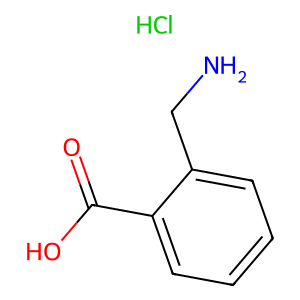
2-(Aminomethyl)benzoic acid hydrochloride
CAS No.:
10017-39-7
M. Wt:
187.62300
M. Fa:
C8H10ClNO2
InChI Key:
HWHUNDJAGYQZHL-UHFFFAOYSA-N
Appearance:
White Solid
Names and Identifiers of 10017-39-7
CAS Number |
10017-39-7 |
|---|---|
EC Number |
695-429-9 |
MDL Number |
MFCD09028989 |
IUPAC Name |
2-(aminomethyl)benzoic acid;hydrochloride |
InChI |
InChI=1S/C8H9NO2.ClH/c9-5-6-3-1-2-4-7(6)8(10)11;/h1-4H,5,9H2,(H,10,11);1H |
InChIKey |
HWHUNDJAGYQZHL-UHFFFAOYSA-N |
Canonical SMILES |
C1=CC=C(C(=C1)CN)C(=O)O.Cl |
UNSPSC Code |
12352100 |
Physical and chemical properties of 10017-39-7
Exact Mass |
187.04000 |
|---|---|
LogP |
2.34580 |
Melting Point |
219-225°C |
Molecular Formula |
C8H10ClNO2 |
Molecular Weight |
187.62300 |
PSA |
63.32000 |
Storage condition |
Inert atmosphere,Room Temperature |
Safety Information of 10017-39-7


Applications of 10017-39-7
2-(Aminomethyl)benzoic acid hydrochloride finds applications in various fields:
- Pharmaceutical Industry: It serves as an intermediate in the synthesis of various drugs and bioactive compounds.
- Biochemical Research: Used in studies involving enzyme inhibition and receptor interactions.
- Chemical Synthesis: Acts as a building block for synthesizing more complex organic molecules.
Its versatility makes it valuable in both academic research and industrial applications.
Interaction Studies of 10017-39-7
Research has indicated that 2-(Aminomethyl)benzoic acid hydrochloride interacts with several biological targets:
- Proteolytic Enzymes: As mentioned earlier, it acts as a competitive inhibitor, which could be useful in designing therapeutic agents targeting proteases.
- Receptors: Studies suggest potential interactions with neurotransmitter receptors, indicating possible implications in neuropharmacology.
Further interaction studies are essential to elucidate its full pharmacological profile.
Biological Activity of 10017-39-7
2-(Aminomethyl)benzoic acid hydrochloride has demonstrated various biological activities, including:
- Enzyme Inhibition: It acts as a competitive inhibitor for certain proteolytic enzymes, which may have implications in therapeutic contexts.
- Antimicrobial Properties: Some studies suggest that derivatives of this compound exhibit antimicrobial activity, making it a candidate for further pharmacological exploration.
- Neuroprotective Effects: Preliminary research indicates potential neuroprotective effects, although more studies are needed to substantiate these claims.
Physical sample testing spectrum (NMR) of 10017-39-7

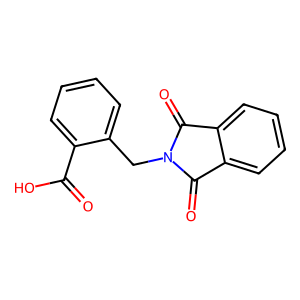 Cas:53663-18-6

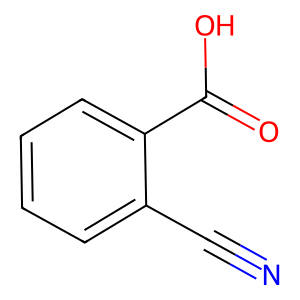 Cas:3839-22-3
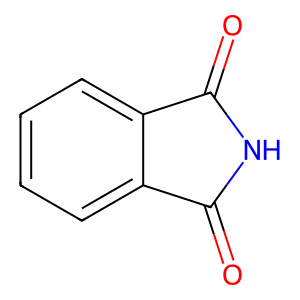 Cas:85-41-6