
2-((4-Methyl-2-nitrophenyl)amino)ethanol
Names and Identifiers of 100418-33-5
CAS Number |
100418-33-5 |
|---|---|
EC Number |
408-090-7 |
MDL Number |
MFCD00274758 |
IUPAC Name |
2-(4-methyl-2-nitroanilino)ethanol |
InChI |
InChI=1S/C9H12N2O3/c1-7-2-3-8(10-4-5-12)9(6-7)11(13)14/h2-3,6,10,12H,4-5H2,1H3 |
InChIKey |
SCZQUWZLEIYDBD-UHFFFAOYSA-N |
Canonical SMILES |
CC1=CC(=C(C=C1)NCCO)[N+](=O)[O-] |
UNII |
KL22OLP94K |
UNSPSC Code |
12352100 |
Physical and chemical properties of 100418-33-5
Acidity coefficient |
14.62±0.10(Predicted) |
|---|---|
Boiling Point |
259ºC |
Density |
1.32 |
Exact Mass |
196.08500 |
Flash Point |
>105ºC |
Index of Refraction |
1.625 |
LogP |
1.90360 |
Melting Point |
79.5ºC |
Molecular Formula |
C9H12N2O3 |
Molecular Weight |
196.20300 |
PSA |
78.08000 |
Solubility |
Chloroform (Slightly), Ethyl Acetate (Slightly), Methanol (Slightly) |
Storage condition |
2-8°C |
Vapour Pressure |
0mmHg at 25°C |
Water Solubility |
350mg/L at 20℃ |
Safety Information of 100418-33-5

Applications of 100418-33-5
The compound finds utility in various applications, including:
- Chemical Synthesis: As a building block in organic synthesis for pharmaceuticals and agrochemicals.
- Dyes and Pigments: Due to its vibrant color, it can be used in dye formulations.
- Biological Research: Investigated for its potential use in studying biological pathways due to its unique structural properties.
Interaction Studies of 100418-33-5
Interaction studies of 2-((4-Methyl-2-nitrophenyl)amino)ethanol focus on its reactivity with biological molecules. Notably:
- Protein Binding: The compound may interact with proteins via covalent bonds due to the electrophilic nature of its nitro group.
- Metabolism Studies: Research indicates that metabolic activation may lead to reactive intermediates that can bind to DNA, although this is less pronounced compared to other nitroanilines.
Biological Activity of 100418-33-5
Research indicates that 2-((4-Methyl-2-nitrophenyl)amino)ethanol exhibits notable biological activities. It has been assessed for its potential toxicological effects, particularly regarding skin sensitization and genotoxicity. Studies suggest that while it possesses structural alerts for mutagenic activity due to its nitroaniline structure, it has shown negative results in genotoxicity assays such as the Ames test. Furthermore, there is no conclusive evidence linking this compound to carcinogenic activity, making it relatively safer compared to other nitroaniline derivatives.
Physical sample testing spectrum (NMR) of 100418-33-5

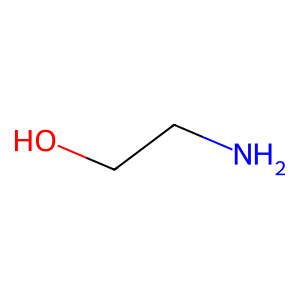 Cas:141-43-5

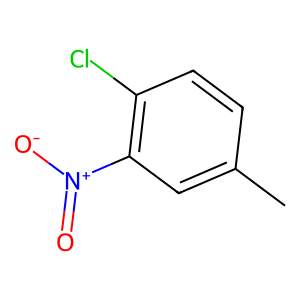 Cas:89-60-1

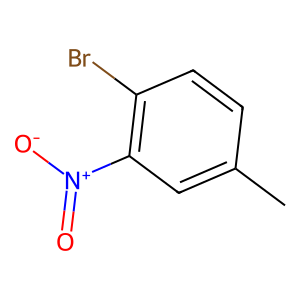 Cas:5326-34-1