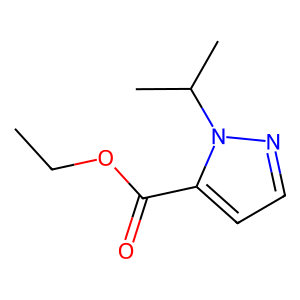
ethyl 1-isopropyl-1H-pyrazole-5-carboxylate
Names and Identifiers of 1007504-99-5
CAS Number |
1007504-99-5 |
|---|---|
IUPAC Name |
ethyl 2-propan-2-ylpyrazole-3-carboxylate |
InChI |
InChI=1S/C9H14N2O2/c1-4-13-9(12)8-5-6-10-11(8)7(2)3/h5-7H,4H2,1-3H3 |
InChIKey |
OKVHCSUVGOFRDC-UHFFFAOYSA-N |
Canonical SMILES |
CCOC(=O)C1=CC=NN1C(C)C |
Physical and chemical properties of 1007504-99-5
Molecular Formula |
C9H14N2O2 |
|---|---|
Molecular Weight |
182.22 |
Storage condition |
Store at room temperature |
Safety Information of 1007504-99-5

Applications of 1007504-99-5
Ethyl 1-(1-methylethyl)-1H-pyrazole-5-carboxylate finds diverse applications across several fields:
- Chemistry: It serves as a precursor for synthesizing more complex pyrazole derivatives.
- Biology: Investigated for its potential therapeutic effects, particularly as a precursor for pharmaceutical agents targeting various diseases.
- Industry: Utilized in the development of agrochemicals and other industrial products due to its versatile reactivity.
Interaction Studies of 1007504-99-5
Studies on the interactions of Ethyl 1-(1-methylethyl)-1H-pyrazole-5-carboxylate reveal its ability to bind with specific enzymes and receptors. This binding can inhibit enzymatic activity or modulate receptor functions, leading to potential therapeutic effects. Understanding these interactions is crucial for optimizing its use in medicinal chemistry and drug development.
Biological Activity of 1007504-99-5
Research into the biological activity of Ethyl 1-(1-methylethyl)-1H-pyrazole-5-carboxylate indicates potential antimicrobial and anti-inflammatory properties. The compound's mechanism of action likely involves interactions with specific molecular targets, such as enzymes and receptors, modulating their activity. The hydrolysis of the ester group may release active metabolites that contribute to its biological effects.
Physical sample testing spectrum (NMR) of 1007504-99-5
