
2-Amino-5-formylthiazole
CAS No.:
1003-61-8
M. Wt:
128.15200
M. Fa:
C4H4N2OS
InChI Key:
HZKMBJCDAXLMDN-UHFFFAOYSA-N
Appearance:
Brown Solid
Names and Identifiers of 2-Amino-5-formylthiazole
CAS Number |
1003-61-8 |
|---|---|
MDL Number |
MFCD02179570 |
IUPAC Name |
2-amino-1,3-thiazole-5-carbaldehyde |
InChI |
InChI=1S/C4H4N2OS/c5-4-6-1-3(2-7)8-4/h1-2H,(H2,5,6) |
InChIKey |
HZKMBJCDAXLMDN-UHFFFAOYSA-N |
Canonical SMILES |
C1=C(SC(=N1)N)C=O |
UNSPSC Code |
12352100 |
Physical and chemical properties of 2-Amino-5-formylthiazole
Acidity coefficient |
3.16±0.10(Predicted) |
|---|---|
Boiling Point |
316.3ºC at 760mmHg |
Density |
1.488g/cm3 |
Exact Mass |
128.00400 |
Flash Point |
145.1ºC |
Index of Refraction |
1.712 |
LogP |
1.11900 |
Melting Point |
122-132 °C |
Molecular Formula |
C4H4N2OS |
Molecular Weight |
128.15200 |
PSA |
84.22000 |
Sensitivity |
Air Sensitive |
Storage condition |
Keep Cold |
Vapour Pressure |
0.000413mmHg at 25°C |
Safety Information of 2-Amino-5-formylthiazole

Applications of 2-Amino-5-formylthiazole
2-Amino-5-formylthiazole has several applications across different fields:
- Dyes and Pigments: It serves as a precursor for synthesizing azo dyes, which are widely used in textiles and other industries.
- Pharmaceuticals: Due to its biological activity, it is being explored for potential use in drug formulations targeting various diseases.
- Chemical Intermediates: The compound is also utilized as an intermediate in organic synthesis for producing other thiazole derivatives.
Interaction Studies of 2-Amino-5-formylthiazole
Interaction studies involving 2-Amino-5-formylthiazole have focused on its reactivity with various biological molecules. These studies help elucidate its mechanisms of action and potential therapeutic benefits. For example, its interactions with proteins and nucleic acids are of particular interest in understanding its pharmacological properties.
Biological Activity of 2-Amino-5-formylthiazole
Research indicates that 2-Amino-5-formylthiazole exhibits various biological activities, including:
- Antimicrobial Properties: Some studies suggest that derivatives of this compound may possess antimicrobial effects against certain bacteria and fungi.
- Antioxidant Activity: The compound has shown potential as an antioxidant, helping to neutralize free radicals in biological systems.
- Pharmacological Potential: Its structural features make it a candidate for further investigation in drug development, particularly in targeting specific diseases.
Physical sample testing spectrum (NMR) of 2-Amino-5-formylthiazole

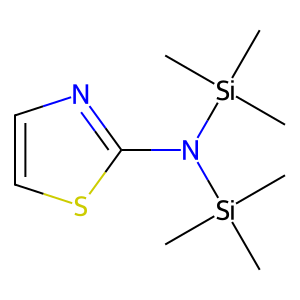 Cas:32284-60-9

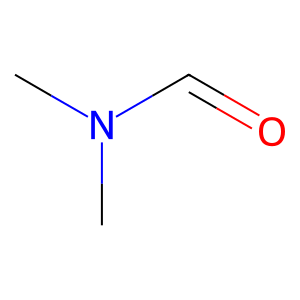 Cas:68-12-2

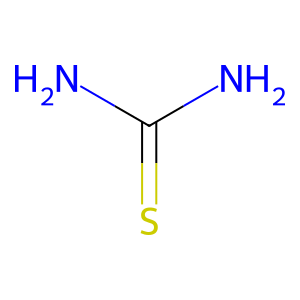 Cas:17356-08-0
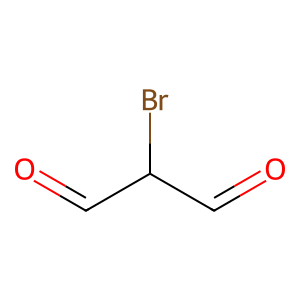 Cas:2065-75-0