
2-Hydroxy-3-methylpyridine
CAS No.:
1003-56-1
M. Wt:
109.12600
M. Fa:
C6H7NO
InChI Key:
MVKDNXIKAWKCCS-UHFFFAOYSA-N
Appearance:
Pale-yellow Solid
Names and Identifiers of 2-Hydroxy-3-methylpyridine
CAS Number |
1003-56-1 |
|---|---|
EC Number |
213-710-2 |
MDL Number |
MFCD00039704 |
IUPAC Name |
3-methyl-1H-pyridin-2-one |
InChI |
InChI=1S/C6H7NO/c1-5-3-2-4-7-6(5)8/h2-4H,1H3,(H,7,8) |
InChIKey |
MVKDNXIKAWKCCS-UHFFFAOYSA-N |
Canonical SMILES |
CC1=CC=CNC1=O |
UNII |
VM19FN4HHV |
UNSPSC Code |
12352100 |
Physical and chemical properties of 2-Hydroxy-3-methylpyridine
Acidity coefficient |
12.61±0.10(Predicted) |
|---|---|
Boiling Point |
307.4ºC at 760 mmHg |
BRN |
1422044 |
Density |
1.053 g/cm3 |
Exact Mass |
109.05300 |
Flash Point |
172.7ºC |
Index of Refraction |
1.499 |
LogP |
1.09560 |
Melting Point |
139-141 °C |
Molecular Formula |
C6H7NO |
Molecular Weight |
109.12600 |
PSA |
33.12000 |
Solubility |
Soluble in methanol. |
Storage condition |
Sealed in dry,Room Temperature |
Vapour Pressure |
0.000724mmHg at 25°C |
Safety Information of 2-Hydroxy-3-methylpyridine

Applications of 2-Hydroxy-3-methylpyridine
2-Hydroxy-3-methylpyridine finds applications across various fields:
- Pharmaceuticals: It serves as an intermediate in synthesizing drugs, particularly those targeting bacterial infections or metabolic disorders.
- Agricultural Chemicals: Its antimicrobial properties make it useful in developing pesticides or fungicides.
- Chemical Industry: Employed as a building block for synthesizing other complex organic compounds.
Interaction Studies of 2-Hydroxy-3-methylpyridine
Studies exploring the interactions of 2-hydroxy-3-methylpyridine with biological systems have revealed insights into its mechanism of action:
- Enzyme Inhibition: Research has shown that this compound can inhibit specific enzymes involved in metabolic pathways, suggesting potential therapeutic uses.
- Binding Affinity Studies: Investigations into its binding affinity with various receptors indicate its potential role as a ligand in drug development.
These interaction studies are crucial for understanding how this compound can be effectively utilized in therapeutic contexts.
Biological Activity of 2-Hydroxy-3-methylpyridine
Research indicates that 2-hydroxy-3-methylpyridine exhibits various biological activities. It has been studied for its potential roles in:
- Antimicrobial Activity: Some studies suggest that this compound may possess antimicrobial properties, making it a candidate for developing new antibiotics.
- Antioxidant Properties: The presence of the hydroxyl group contributes to its ability to scavenge free radicals, indicating potential use in formulations aimed at reducing oxidative stress.
- Enzymatic Interactions: This compound may interact with specific enzymes involved in metabolic pathways, impacting processes such as vitamin metabolism.
Physical sample testing spectrum (NMR) of 2-Hydroxy-3-methylpyridine

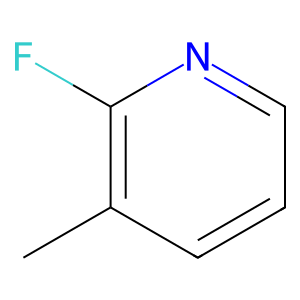 Cas:2369-18-8

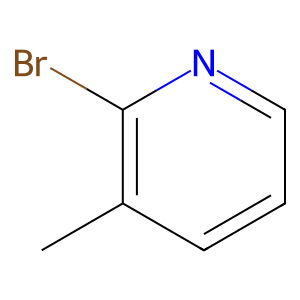 Cas:3430-17-9
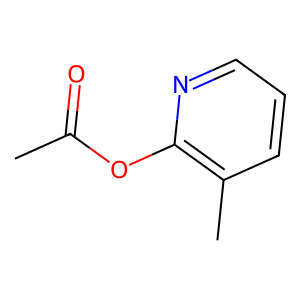 Cas:1006-97-9