
2-Methyl-1,3-thiazole-5-carboxamide
CAS No.:
99979-78-9
M. Wt:
142.17900
M. Fa:
C5H6N2OS
InChI Key:
HJPJGOLULCTEAX-UHFFFAOYSA-N
Names and Identifiers of 2-Methyl-1,3-thiazole-5-carboxamide
CAS Number |
99979-78-9 |
|---|---|
IUPAC Name |
2-methyl-1,3-thiazole-5-carboxamide |
InChI |
InChI=1S/C5H6N2OS/c1-3-7-2-4(9-3)5(6)8/h2H,1H3,(H2,6,8) |
InChIKey |
HJPJGOLULCTEAX-UHFFFAOYSA-N |
Canonical SMILES |
CC1=NC=C(S1)C(=O)N |
Physical and chemical properties of 2-Methyl-1,3-thiazole-5-carboxamide
Exact Mass |
142.02000 |
|---|---|
LogP |
1.43460 |
Molecular Formula |
C5H6N2OS |
Molecular Weight |
142.17900 |
PSA |
85.21000 |
Safety Information of 2-Methyl-1,3-thiazole-5-carboxamide

Applications of 2-Methyl-1,3-thiazole-5-carboxamide
The applications of 2-Methyl-1,3-thiazole-5-carboxamide span several fields:
- Pharmaceutical Development: Due to its anticancer and antimicrobial properties, it is being explored as a lead compound for drug development.
- Agricultural Chemistry: Its potential use as a pesticide or herbicide is being investigated due to its biological activity against pathogens.
- Material Science: The compound's unique properties may also find applications in developing new materials with specific functionalities.
Interaction Studies of 2-Methyl-1,3-thiazole-5-carboxamide
Interaction studies involving 2-Methyl-1,3-thiazole-5-carboxamide focus on its binding affinities with various biological targets. Notable findings include:
- Protein Kinases: The compound has shown promising results in inhibiting certain kinases involved in signal transduction pathways related to cancer.
- Enzyme Inhibition: It has been studied for its ability to inhibit enzymes that play critical roles in metabolic pathways.
These interactions are crucial for understanding the mechanism of action and optimizing the compound for therapeutic use.
Biological Activity of 2-Methyl-1,3-thiazole-5-carboxamide
2-Methyl-1,3-thiazole-5-carboxamide exhibits various biological activities, making it a subject of interest in medicinal chemistry. Studies have shown that this compound possesses:
- Anticancer Properties: Research indicates that derivatives of thiazole-5-carboxamide exhibit significant anticancer activity against various cancer cell lines.
- Antimicrobial Activity: The compound has demonstrated effectiveness against certain bacterial strains, suggesting potential as an antimicrobial agent.
- Kinase Inhibition: Some derivatives have been identified as inhibitors of specific kinases, which are crucial in cancer progression and other diseases.
Physical sample testing spectrum (NMR) of 2-Methyl-1,3-thiazole-5-carboxamide

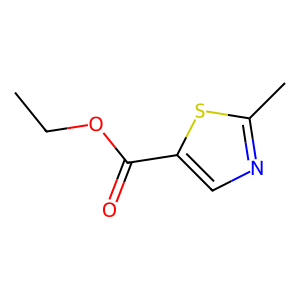 Cas:79836-78-5

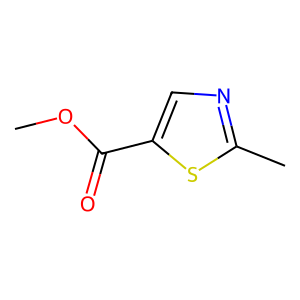 Cas:53233-90-2