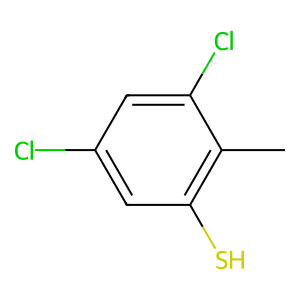
3,5-Dichloro-2-methylthiophenol
Names and Identifiers of 3,5-Dichloro-2-methylthiophenol
CAS Number |
1804516-82-2 |
|---|---|
IUPAC Name |
3,5-dichloro-2-methylbenzenethiol |
InChI |
InChI=1S/C7H6Cl2S/c1-4-6(9)2-5(8)3-7(4)10/h2-3,10H,1H3 |
InChIKey |
NZYVWDNAVCPIBL-UHFFFAOYSA-N |
Canonical SMILES |
CC1=C(C=C(C=C1Cl)Cl)S |
Physical and chemical properties of 3,5-Dichloro-2-methylthiophenol
Molecular Formula |
C7H6Cl2S |
|---|---|
Molecular Weight |
193.09 |
Applications of 3,5-Dichloro-2-methylthiophenol
3,5-Dichloro-2-methylthiophenol has diverse applications across various fields:
- Chemistry: Serves as a building block in the synthesis of more complex organic molecules.
- Biology: Investigated for its potential biological activities, particularly in antimicrobial and antifungal research.
- Medicine: Explored for possible therapeutic uses in drug development.
- Industry: Utilized in producing specialty chemicals and as an intermediate in synthesizing pharmaceuticals and agrochemicals.
Interaction Studies of 3,5-Dichloro-2-methylthiophenol
The interaction studies of 3,5-Dichloro-2-methylthiophenol reveal that it can interact with various molecular targets within biological systems. Its ability to form covalent bonds with proteins allows it to modulate enzymatic activities, making it a candidate for further exploration in drug design and development. Understanding these interactions is crucial for assessing its potential therapeutic effects and toxicity profiles.
Biological Activity of 3,5-Dichloro-2-methylthiophenol
Research into the biological properties of 3,5-Dichloro-2-methylthiophenol indicates potential antimicrobial and antifungal activities. Its mechanism of action likely involves forming covalent bonds with nucleophilic sites in proteins or enzymes, which can inhibit or modify their functions. Studies suggest that this compound may also possess therapeutic potential, warranting further investigation into its pharmacological applications.