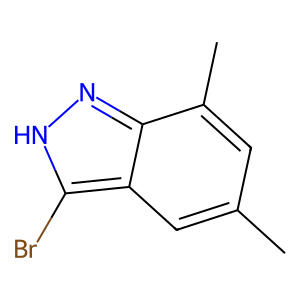
3-BROMO-5,7-DIMETHYL (1H)INDAZOLE
CAS No.:
1000341-11-6
M. Wt:
225.085
M. Fa:
C9H9BrN2
InChI Key:
-
Appearance:
White Solid
Names and Identifiers of 3-BROMO-5,7-DIMETHYL (1H)INDAZOLE
CAS Number |
1000341-11-6 |
|---|---|
IUPAC Name |
3-bromanyl-5,7-dimethyl-2H-indazole |
Canonical SMILES |
CC1=CC2=C(NN=C2C(=C1)C)Br |
Physical and chemical properties of 3-BROMO-5,7-DIMETHYL (1H)INDAZOLE
Boiling Point |
357.0±37.0 °C at 760 mmHg |
|---|---|
Density |
1.6±0.1 g/cm3 |
Exact Mass |
223.994904 |
Flash Point |
169.7±26.5 °C |
Index of Refraction |
1.674 |
LogP |
3.81 |
Molecular Formula |
C9H9BrN2 |
Molecular Weight |
225.085 |
PSA |
28.68000 |
Vapour Pressure |
0.0±0.8 mmHg at 25°C |
Applications of 3-BROMO-5,7-DIMETHYL (1H)INDAZOLE
3-Bromo-5,7-dimethyl-1H-indazole has diverse applications across various fields:
- Chemistry: Serves as a building block for synthesizing more complex molecules and as a reagent in organic reactions.
- Biology: Investigated for potential therapeutic applications in drug development.
- Industry: Utilized in creating new materials and as an intermediate in synthesizing dyes and pigments.
Interaction Studies of 3-BROMO-5,7-DIMETHYL (1H)INDAZOLE
The mechanism of action of 3-Bromo-5,7-dimethyl-1H-indazole often involves interactions with specific molecular targets such as enzymes or receptors. Its binding affinity can be influenced by the presence of the bromine atom and methyl groups, which may alter the conformation and reactivity of the compound. These interactions are crucial for understanding its biological effects and therapeutic potential.
Biological Activity of 3-BROMO-5,7-DIMETHYL (1H)INDAZOLE
Research indicates that 3-Bromo-5,7-dimethyl-1H-indazole exhibits potential biological activities, including:
- Antimicrobial Properties: It has been studied for its effectiveness against various bacterial strains.
- Antiviral Activity: Preliminary studies suggest it may inhibit viral replication.
- Anticancer Potential: Investigations are ongoing regarding its ability to induce apoptosis in cancer cells and inhibit tumor growth.