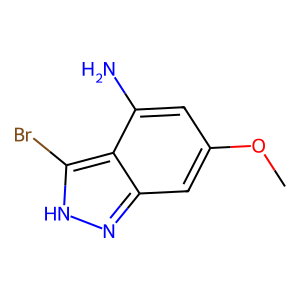
3-bromo-6-methoxy-2H-indazol-4-amine
CAS No.:
1000341-23-0
M. Wt:
242.073
M. Fa:
C8H8BrN3O
InChI Key:
-
Names and Identifiers of 3-bromo-6-methoxy-2H-indazol-4-amine
CAS Number |
1000341-23-0 |
|---|---|
IUPAC Name |
3-bromanyl-6-methoxy-2H-indazol-4-amine |
Canonical SMILES |
COC1=CC2=NNC(=C2C(=C1)N)Br |
Physical and chemical properties of 3-bromo-6-methoxy-2H-indazol-4-amine
Boiling Point |
465.1±40.0 °C at 760 mmHg |
|---|---|
Density |
1.8±0.1 g/cm3 |
Exact Mass |
240.985062 |
Flash Point |
235.1±27.3 °C |
Index of Refraction |
1.736 |
LogP |
1.51 |
Molecular Formula |
C8H8BrN3O |
Molecular Weight |
242.073 |
PSA |
63.93000 |
Vapour Pressure |
0.0±1.1 mmHg at 25°C |
Applications of 3-bromo-6-methoxy-2H-indazol-4-amine
3-Bromo-6-methoxy-1H-indazol-4-amine has several applications in various fields:
- Chemistry: It serves as a building block for synthesizing more complex molecules.
- Biology: The compound is explored for its potential anti-inflammatory and anticancer properties.
- Medicine: Investigated as a therapeutic agent due to its ability to interact with specific biological targets.
- Industry: Utilized in developing new materials and chemical processes.
Interaction Studies of 3-bromo-6-methoxy-2H-indazol-4-amine
Studies on 3-Bromo-6-methoxy-1H-indazol-4-amine focus on its interaction with specific molecular targets. For instance, it may act as an inhibitor of certain enzymes by binding to their active sites. The presence of bromine and methoxy groups enhances its binding affinity and selectivity, potentially leading to significant biological effects.
Biological Activity of 3-bromo-6-methoxy-2H-indazol-4-amine
The compound has been investigated for its potential biological activities, including:
- Anti-inflammatory Properties: It may inhibit certain enzymes involved in inflammatory pathways.
- Anticancer Activity: Research suggests that it could interact with various biological targets relevant to cancer treatment.
The specific interactions with molecular targets, such as enzymes or receptors, can lead to diverse biological effects, making it a candidate for further pharmacological studies.