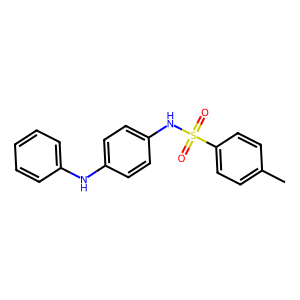
4'-anilinotoluene-4-sulphonanilide
Names and Identifiers of 4'-anilinotoluene-4-sulphonanilide
CAS Number |
100-93-6 |
|---|---|
IUPAC Name |
4-methyl-N-(4-phenylazanylphenyl)benzenesulfonamide |
Canonical SMILES |
CC1=CC=C(C=C1)S(=O)(=O)NC2=CC=C(C=C2)NC3=CC=CC=C3 |
Physical and chemical properties of 4'-anilinotoluene-4-sulphonanilide
Boiling Point |
521ºC at 760mmHg |
|---|---|
Density |
1.297g/cm3 |
Exact Mass |
338.10900 |
Flash Point |
268.9ºC |
Index of Refraction |
1.665 |
LogP |
5.76620 |
Molecular Formula |
C19H18N2O2S |
Molecular Weight |
338.42300 |
PSA |
66.58000 |
Vapour Pressure |
5.89E-11mmHg at 25°C |
Safety Information of 4'-anilinotoluene-4-sulphonanilide

Applications of 4'-anilinotoluene-4-sulphonanilide
Benzenesulfonamide, 4-methyl-N-[4-(phenylamino)phenyl]- has various applications in research and industry:
- Analytical Chemistry: It can be analyzed using high-performance liquid chromatography (HPLC), which is useful for separating and purifying compounds in pharmacokinetic studies.
- Pharmaceutical Development: Due to its biological activity, it serves as a lead compound for developing new therapeutic agents targeting carbonic anhydrase or other biological pathways.
- Material Science: The compound may also find applications in materials science due to its unique structural properties.
Interaction Studies of 4'-anilinotoluene-4-sulphonanilide
Studies on interaction profiles indicate that benzenesulfonamide derivatives can interact with various biological targets, including enzymes involved in metabolic pathways. Specific interactions with carbonic anhydrase isoforms have been documented, highlighting their potential as enzyme inhibitors. Further research into these interactions could elucidate mechanisms of action and inform drug design strategies.
Biological Activity of 4'-anilinotoluene-4-sulphonanilide
Benzenesulfonamide derivatives have been studied for their biological activities, particularly as inhibitors of carbonic anhydrase enzymes, which play crucial roles in physiological processes such as respiration and acid-base balance. Research indicates that certain benzenesulfonamides exhibit significant inhibitory effects against specific cancer cell lines, suggesting potential applications in cancer therapy. The compound has been evaluated by the National Cancer Institute for its anticancer properties, indicating its relevance in medicinal chemistry.
Physical sample testing spectrum (NMR) of 4'-anilinotoluene-4-sulphonanilide

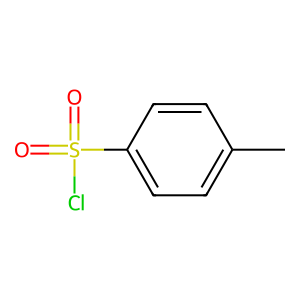 Cas:98-59-9

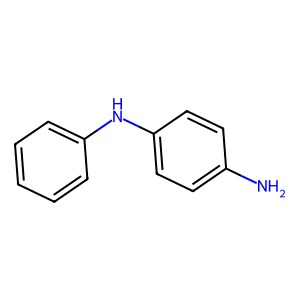 Cas:101-54-2
