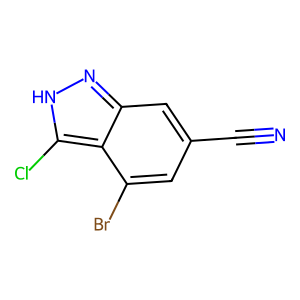
4-BROMO-3-CHLORO-6-CYANO (1H)INDAZOLE
Names and Identifiers of 4-BROMO-3-CHLORO-6-CYANO (1H)INDAZOLE
CAS Number |
1000342-57-3 |
|---|---|
IUPAC Name |
4-bromanyl-3-chloranyl-2H-indazole-6-carbonitrile |
Canonical SMILES |
C1=C(C=C(C2=C(NN=C21)Cl)Br)C#N |
Physical and chemical properties of 4-BROMO-3-CHLORO-6-CYANO (1H)INDAZOLE
Boiling Point |
428.6±40.0 °C at 760 mmHg |
|---|---|
Density |
2.0±0.1 g/cm3 |
Exact Mass |
254.919876 |
Flash Point |
213.0±27.3 °C |
Index of Refraction |
1.746 |
LogP |
2.63 |
Molecular Formula |
C8H3BrClN3 |
Molecular Weight |
256.487 |
PSA |
52.47000 |
Vapour Pressure |
0.0±1.0 mmHg at 25°C |
Applications of 4-BROMO-3-CHLORO-6-CYANO (1H)INDAZOLE
The applications of 4-Bromo-3-chloro-1H-indazole-6-carbonitrile span several fields:
- Medicinal Chemistry: Its unique structure makes it a candidate for developing new pharmaceuticals targeting various diseases.
- Material Science: The compound may also find uses in the development of advanced materials due to its electronic properties.
- Research: It serves as an important intermediate in organic synthesis and drug discovery.
Interaction Studies of 4-BROMO-3-CHLORO-6-CYANO (1H)INDAZOLE
Studies on the interactions of 4-Bromo-3-chloro-1H-indazole-6-carbonitrile with biological systems are crucial for understanding its potential therapeutic effects. It has been noted to act as an inhibitor for certain cytochrome P450 enzymes, which are essential for drug metabolism. This property may influence its pharmacokinetics and therapeutic efficacy.
Biological Activity of 4-BROMO-3-CHLORO-6-CYANO (1H)INDAZOLE
Indazole derivatives, including 4-Bromo-3-chloro-1H-indazole-6-carbonitrile, have shown significant biological activities. Research indicates potential anti-cancer properties, antimicrobial effects, and possible applications in treating neurological disorders. The presence of halogen substituents may enhance these biological activities by affecting the compound's interaction with biological targets.