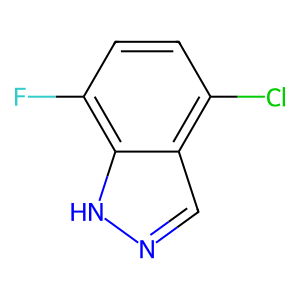
4-CHLORO-7-FLUORO (1H)INDAZOLE
CAS No.:
1000341-84-3
M. Wt:
170.572
M. Fa:
C7H4ClFN2
InChI Key:
-
Names and Identifiers of 4-CHLORO-7-FLUORO (1H)INDAZOLE
CAS Number |
1000341-84-3 |
|---|---|
IUPAC Name |
4-chloranyl-7-fluoranyl-1H-indazole |
Canonical SMILES |
C1=CC(=C2C=NNC2=C1F)Cl |
Physical and chemical properties of 4-CHLORO-7-FLUORO (1H)INDAZOLE
Boiling Point |
311.6±22.0 °C at 760 mmHg |
|---|---|
Density |
1.5±0.1 g/cm3 |
Exact Mass |
170.004700 |
Flash Point |
142.3±22.3 °C |
Index of Refraction |
1.669 |
LogP |
2.42 |
Molecular Formula |
C7H4ClFN2 |
Molecular Weight |
170.572 |
PSA |
28.68000 |
Vapour Pressure |
0.0±0.6 mmHg at 25°C |
Applications of 4-CHLORO-7-FLUORO (1H)INDAZOLE
4-chloro-7-fluoro-1H-indazole has potential applications in various fields:
- Pharmaceuticals: Due to its biological activity, it may serve as a lead compound for developing new drugs targeting microbial infections or parasitic diseases.
- Material Science: Its ability to form complexes with metals makes it useful in photonic materials and sensors.
Interaction Studies of 4-CHLORO-7-FLUORO (1H)INDAZOLE
Research into the molecular interactions of 4-chloro-7-fluoro-1H-indazole highlights its capacity to engage in various bonding interactions. Studies have indicated that it can participate in C–H⋯π and C–H⋯X interactions (where X represents halogens), which are significant for understanding its crystallization behavior and stability in pharmaceutical formulations.
Biological Activity of 4-CHLORO-7-FLUORO (1H)INDAZOLE
Indazole derivatives, including 4-chloro-7-fluoro-1H-indazole, have demonstrated a range of biological activities. They are known for their potential as antimicrobial agents and inhibitors of various enzymes:
- Inhibition of Lactoperoxidase: Studies have shown that indazole derivatives can inhibit lactoperoxidase activity, which is important for antimicrobial defense in biological systems.
- Antiparasitic Activity: Some indazole derivatives have shown efficacy against parasites such as Trypanosoma cruzi and Leishmania species, suggesting their potential use in treating parasitic infections.