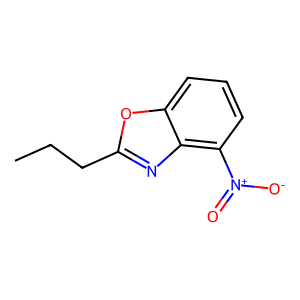
4-Nitro-2-propyl-1,3-benzoxazole
CAS No.:
1000018-05-2
M. Wt:
206.19800
M. Fa:
C10H10N2O3
InChI Key:
RFNYHMIDCHJYAU-UHFFFAOYSA-N
Names and Identifiers of 4-Nitro-2-propyl-1,3-benzoxazole
CAS Number |
1000018-05-2 |
|---|---|
MDL Number |
MFCD09864801 |
IUPAC Name |
4-nitro-2-propyl-1,3-benzoxazole |
InChI |
InChI=1S/C10H10N2O3/c1-2-4-9-11-10-7(12(13)14)5-3-6-8(10)15-9/h3,5-6H,2,4H2,1H3 |
InChIKey |
RFNYHMIDCHJYAU-UHFFFAOYSA-N |
Canonical SMILES |
CCCC1=NC2=C(C=CC=C2O1)[N+](=O)[O-] |
UNSPSC Code |
12352100 |
Physical and chemical properties of 4-Nitro-2-propyl-1,3-benzoxazole
Exact Mass |
206.06900 |
|---|---|
LogP |
3.21170 |
Molecular Formula |
C10H10N2O3 |
Molecular Weight |
206.19800 |
PSA |
71.85000 |
Safety Information of 4-Nitro-2-propyl-1,3-benzoxazole

Applications of 4-Nitro-2-propyl-1,3-benzoxazole
4-Nitro-2-propyl-1,3-benzoxazole has various applications:
- Pharmaceutical Intermediates: It serves as a precursor in the synthesis of biologically active compounds.
- Agricultural Chemistry: Potential use in developing agrochemicals due to its biological activity against pests and pathogens.
- Material Science: Investigated for its properties in polymer chemistry and as a potential additive in plastics for improved performance.
Interaction Studies of 4-Nitro-2-propyl-1,3-benzoxazole
Interaction studies involving 4-nitro-2-propyl-1,3-benzoxazole focus on its binding affinity and activity against various biological targets:
- Enzyme Inhibition Studies: Research indicates that it may inhibit specific enzymes involved in metabolic pathways, contributing to its pharmacological effects.
- Receptor Binding Studies: Investigations into its interaction with neurotransmitter receptors suggest potential applications in neuropharmacology.
These studies are crucial for understanding the compound's mechanism of action and optimizing its therapeutic potential.
Biological Activity of 4-Nitro-2-propyl-1,3-benzoxazole
Benzoxazole derivatives, including 4-nitro-2-propyl-1,3-benzoxazole, have been studied for their biological activities. They exhibit a range of pharmacological effects, such as:
- Antimicrobial Activity: Some benzoxazoles demonstrate significant antibacterial and antifungal properties.
- Antioxidant Properties: The nitro group can enhance the antioxidant capacity of the compound.
- Potential Anticancer Activity: Certain derivatives have shown promise in inhibiting cancer cell proliferation in vitro.
- Neuroprotective Effects: Some studies suggest that benzoxazoles may offer neuroprotective benefits due to their ability to modulate neurotransmitter systems.