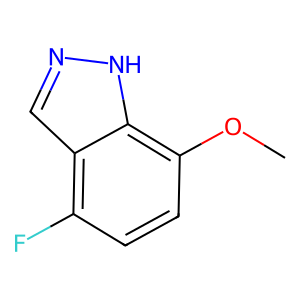
4-fluoro-7-methoxy-1H-indazole
Names and Identifiers of 4-fluoro-7-methoxy-1H-indazole
CAS Number |
1000341-74-1 |
|---|---|
IUPAC Name |
4-fluoro-7-methoxy-1H-indazole |
InChI |
InChI=1S/C8H7FN2O/c1-12-7-3-2-6(9)5-4-10-11-8(5)7/h2-4H,1H3,(H,10,11) |
InChIKey |
IMRWTEVYVSFJKW-UHFFFAOYSA-N |
Canonical SMILES |
COC1=C2C(=C(C=C1)F)C=NN2 |
Physical and chemical properties of 4-fluoro-7-methoxy-1H-indazole
Boiling Point |
330.5±22.0 °C at 760 mmHg |
|---|---|
Density |
1.3±0.1 g/cm3 |
Exact Mass |
166.054245 |
Flash Point |
153.7±22.3 °C |
Index of Refraction |
1.620 |
LogP |
1.86 |
Molecular Formula |
C8H7FN2O |
Molecular Weight |
166.152 |
PSA |
37.91000 |
Vapour Pressure |
0.0±0.7 mmHg at 25°C |
Safety Information of 4-fluoro-7-methoxy-1H-indazole

Applications of 4-fluoro-7-methoxy-1H-indazole
4-fluoro-7-methoxy-1H-indazole has several applications in various fields:
- Medicinal Chemistry: It serves as a building block for synthesizing more complex drug candidates with potential therapeutic effects.
- Biological Research: The compound is studied for its role in understanding biological mechanisms and pathways due to its unique chemical structure.
- Chemical Manufacturing: It is utilized as an intermediate in developing new materials and compounds in industrial processes.
Interaction Studies of 4-fluoro-7-methoxy-1H-indazole
Research into the interaction mechanisms of 4-fluoro-7-methoxy-1H-indazole suggests that it may act on specific molecular targets such as protein kinases or other enzymes involved in disease pathways. The unique arrangement of fluorine and methoxy groups enhances its selectivity and binding affinity, making it a valuable compound for further studies in drug design and development.
Biological Activity of 4-fluoro-7-methoxy-1H-indazole
4-fluoro-7-methoxy-1H-indazole exhibits significant biological activity, making it a subject of interest in pharmacological research. It has been investigated for its potential antimicrobial, anticancer, and anti-inflammatory properties. The presence of fluorine and methoxy groups enhances its binding affinity to specific enzymes or receptors, potentially leading to inhibition or modulation of various biological pathways.