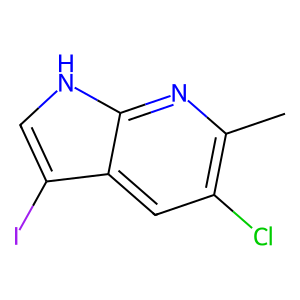
5-CHLORO-3-IODO-6-METHYL-7-AZAINDOLE
CAS No.:
1000340-16-8
M. Wt:
292.504
M. Fa:
C8H6ClIN2
InChI Key:
-
Names and Identifiers of 5-CHLORO-3-IODO-6-METHYL-7-AZAINDOLE
CAS Number |
1000340-16-8 |
|---|---|
IUPAC Name |
5-chloranyl-3-iodanyl-6-methyl-1H-pyrrolo[2,3-b]pyridine |
Canonical SMILES |
CC1=C(C=C2C(=CNC2=N1)I)Cl |
Physical and chemical properties of 5-CHLORO-3-IODO-6-METHYL-7-AZAINDOLE
Density |
2.0±0.1 g/cm3 |
|---|---|
Exact Mass |
291.926422 |
Index of Refraction |
1.750 |
LogP |
4.38 |
Molecular Formula |
C8H6ClIN2 |
Molecular Weight |
292.504 |
PSA |
28.68000 |
Storage condition |
2-8°C |
Applications of 5-CHLORO-3-IODO-6-METHYL-7-AZAINDOLE
5-Chloro-3-iodo-6-methyl-1H-pyrrolo[2,3-b]pyridine has several potential applications:
- Pharmaceutical Development: Due to its biological activities, it serves as a lead compound in drug discovery for conditions like diabetes and cancer.
- Chemical Probes: It can be utilized as a chemical probe in biological studies to investigate specific pathways or mechanisms.
- Material Science: Its unique structure may find applications in developing new materials with specific electronic or optical properties.
Interaction Studies of 5-CHLORO-3-IODO-6-METHYL-7-AZAINDOLE
Studies on the interactions of 5-Chloro-3-iodo-6-methyl-1H-pyrrolo[2,3-b]pyridine with biological targets are crucial for understanding its mechanism of action:
- Target Identification: Investigating which proteins or enzymes interact with this compound can provide insights into its therapeutic potential.
- Binding Affinity Studies: Assessing how strongly the compound binds to target sites helps in evaluating its efficacy as a drug candidate.
- In Vivo Studies: Animal models are often used to study the pharmacokinetics and dynamics of this compound, providing data on absorption, distribution, metabolism, and excretion.
Biological Activity of 5-CHLORO-3-IODO-6-METHYL-7-AZAINDOLE
Research indicates that compounds within the pyrrolo[2,3-b]pyridine class exhibit various biological activities, including:
- Antidiabetic Properties: Some derivatives have shown significant antidiabetic activity in preclinical studies, suggesting potential therapeutic applications in diabetes management.
- Anticancer Activity: Certain related compounds have been investigated for their ability to inhibit cancer cell growth, particularly through mechanisms involving focal adhesion kinase inhibition.
- Neuroprotective Effects: There is ongoing research into the neuroprotective properties of pyrrolo[2,3-b]pyridines, which may relate to their ability to modulate neurotransmitter systems.