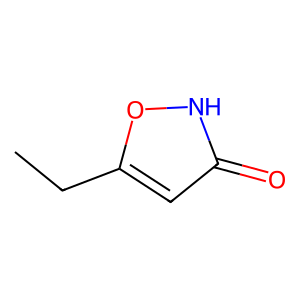
5-Ethyl-isoxazol-3-OL
CAS No.:
10004-45-2
M. Wt:
113.11500
M. Fa:
C5H7NO2
InChI Key:
COJBJDILSDCGSL-UHFFFAOYSA-N
Appearance:
White Solid
Names and Identifiers of 5-Ethyl-isoxazol-3-OL
CAS Number |
10004-45-2 |
|---|---|
EC Number |
857-586-3 |
MDL Number |
MFCD20482160 |
IUPAC Name |
5-ethyl-1,2-oxazol-3-one |
InChI |
InChI=1S/C5H7NO2/c1-2-4-3-5(7)6-8-4/h3H,2H2,1H3,(H,6,7) |
InChIKey |
COJBJDILSDCGSL-UHFFFAOYSA-N |
Canonical SMILES |
CCC1=CC(=O)NO1 |
UNSPSC Code |
12352100 |
Physical and chemical properties of 5-Ethyl-isoxazol-3-OL
Acidity coefficient |
12.60±0.40(Predicted) |
|---|---|
Density |
1.118±0.06 g/cm3(Predicted) |
Exact Mass |
113.04800 |
H Bond Acceptors |
2 |
H Bond Donors |
1 |
LogP |
0.94260 |
Melting Point |
45-46 °C |
Molecular Formula |
C5H7NO2 |
Molecular Weight |
113.11500 |
PSA |
46.26000 |
Storage condition |
2-8°C |
Safety Information of 5-Ethyl-isoxazol-3-OL

Applications of 5-Ethyl-isoxazol-3-OL
5-Ethyl-isoxazol-3-OL has several applications across different fields:
- Pharmaceuticals: Due to its biological activity, it serves as a lead compound in drug discovery for anti-inflammatory and antimicrobial agents.
- Chemical research: It acts as a building block in synthesizing more complex organic molecules.
- Material science: The compound is explored for developing new materials with specific properties, such as polymers and coatings.
Interaction Studies of 5-Ethyl-isoxazol-3-OL
Research into the interactions of 5-Ethyl-isoxazol-3-OL with biological targets has revealed significant insights into its mechanism of action. Studies indicate that it may interact with specific enzymes or receptors, leading to modulation of biochemical pathways involved in inflammation and immune response regulation. These interactions highlight its potential therapeutic roles in various diseases.
Biological Activity of 5-Ethyl-isoxazol-3-OL
Isoxazole derivatives, including 5-Ethyl-isoxazol-3-OL, have been studied for their diverse biological activities. They exhibit potential as:
- Anti-inflammatory agents: These compounds can modulate immune responses, making them candidates for treating inflammatory diseases.
- Antimicrobial agents: Certain isoxazoles have shown efficacy against various bacterial strains.
- Anticancer properties: Some studies suggest that isoxazole derivatives may inhibit tumor growth through various mechanisms, including apoptosis induction and cell cycle arrest.
Physical sample testing spectrum (NMR) of 5-Ethyl-isoxazol-3-OL

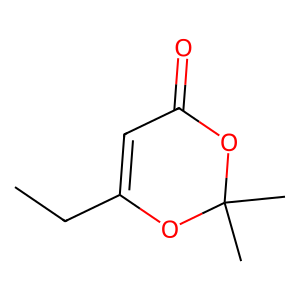 Cas:72324-46-0

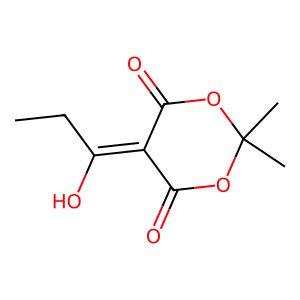 Cas:66696-76-2
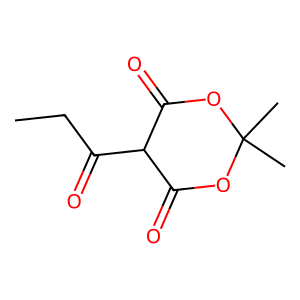 Cas:64074-05-1