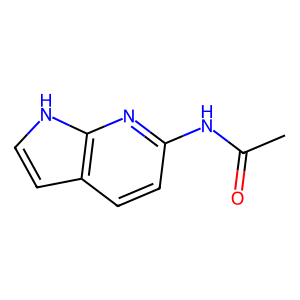
6-ACETYLAMINO-7-AZAINDOLE
CAS No.:
1000341-56-9
M. Wt:
175.187
M. Fa:
C9H9N3O
InChI Key:
-
Names and Identifiers of 6-ACETYLAMINO-7-AZAINDOLE
CAS Number |
1000341-56-9 |
|---|---|
IUPAC Name |
N-(1H-pyrrolo[2,3-b]pyridin-6-yl)ethanamide |
Canonical SMILES |
CC(=O)NC1=NC2=C(C=C1)C=CN2 |
Physical and chemical properties of 6-ACETYLAMINO-7-AZAINDOLE
Acidity coefficient |
13.48±0.43(Predicted) |
|---|---|
Density |
1.4±0.1 g/cm3 |
Exact Mass |
175.074554 |
Index of Refraction |
1.725 |
LogP |
1.08 |
Molecular Formula |
C9H9N3O |
Molecular Weight |
175.187 |
PSA |
61.27000 |
Storage condition |
2-8°C |
Applications of 6-ACETYLAMINO-7-AZAINDOLE
N-(1H-Pyrrolo[2,3-b]pyridin-6-yl)acetamide has potential applications in:
- Pharmaceutical Development: Due to its biological activities, it may serve as a lead compound for developing new drugs targeting cancer or infectious diseases.
- Chemical Research: This compound can be used as a building block in organic synthesis for creating more complex heterocyclic compounds.
Interaction Studies of 6-ACETYLAMINO-7-AZAINDOLE
Studies on N-(1H-Pyrrolo[2,3-b]pyridin-6-yl)acetamide interactions with biological targets are crucial for understanding its mechanism of action. Key areas of investigation include:
- Binding Affinity Studies: Determining how well this compound binds to specific enzymes or receptors can provide insights into its therapeutic potential.
- Mechanistic Studies: Understanding how this compound affects cellular pathways involved in disease processes is essential for its development as a therapeutic agent.
Biological Activity of 6-ACETYLAMINO-7-AZAINDOLE
Research indicates that compounds similar to N-(1H-Pyrrolo[2,3-b]pyridin-6-yl)acetamide exhibit significant biological activities. These include:
- Anticancer Properties: Some derivatives of pyrrolo[2,3-b]pyridine have shown promise in inhibiting tumor growth and inducing apoptosis in cancer cells.
- Antimicrobial Activity: Certain analogs have demonstrated effectiveness against various bacterial strains.
- Kinase Inhibition: Pyrrolo[2,3-b]pyridine compounds are being investigated for their ability to inhibit specific kinases involved in cancer progression.