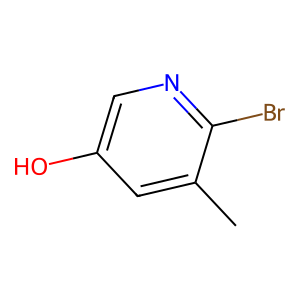
6-Bromo-5-methylpyridin-3-ol
Names and Identifiers of 6-Bromo-5-methylpyridin-3-ol
CAS Number |
1003711-43-0 |
|---|---|
EC Number |
879-659-9 |
MDL Number |
MFCD09839267 |
IUPAC Name |
6-bromo-5-methylpyridin-3-ol |
InChI |
InChI=1S/C6H6BrNO/c1-4-2-5(9)3-8-6(4)7/h2-3,9H,1H3 |
InChIKey |
KCCYUVIIKCPVDH-UHFFFAOYSA-N |
Canonical SMILES |
CC1=CC(=CN=C1Br)O |
UNSPSC Code |
12352100 |
Physical and chemical properties of 6-Bromo-5-methylpyridin-3-ol
Boiling Point |
377.2±37.0 °C at 760 mmHg |
|---|---|
Density |
1.7±0.1 g/cm3 |
Exact Mass |
186.963272 |
Flash Point |
181.9±26.5 °C |
Index of Refraction |
1.598 |
LogP |
2.14 |
Molecular Formula |
C6H6BrNO |
Molecular Weight |
188.022 |
PSA |
33.12000 |
Vapour Pressure |
0.0±0.9 mmHg at 25°C |
Safety Information of 6-Bromo-5-methylpyridin-3-ol

Applications of 6-Bromo-5-methylpyridin-3-ol
6-Bromo-5-methylpyridin-3-ol has several applications, particularly in:
- Pharmaceutical Development: Due to its biological activity, it is explored as a lead compound for developing new antimicrobial agents.
- Organic Synthesis: Acts as an important building block for synthesizing other complex organic molecules.
- Material Science: Used in the development of functional materials due to its unique chemical properties.
Interaction Studies of 6-Bromo-5-methylpyridin-3-ol
Studies on the interactions of 6-Bromo-5-methylpyridin-3-ol with biological targets have shown that it can interact with various enzymes and receptors. Its ability to inhibit specific metabolic enzymes suggests potential use in drug design aimed at modulating metabolic pathways. Furthermore, interaction studies with metal ions have indicated that it could form stable complexes, which might be useful in catalysis or sensing applications.
Biological Activity of 6-Bromo-5-methylpyridin-3-ol
Research indicates that 6-Bromo-5-methylpyridin-3-ol exhibits significant biological activity. It has been studied for its potential as an antibacterial and antifungal agent. The presence of the bromine atom enhances its lipophilicity, which may improve membrane permeability and biological efficacy. Additionally, it has shown promise in inhibiting certain enzymes involved in metabolic pathways, suggesting potential therapeutic applications.
Physical sample testing spectrum (NMR) of 6-Bromo-5-methylpyridin-3-ol
