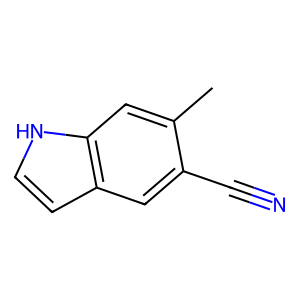
6-Methyl-1H-indole-5-carbonitrile
CAS No.:
1000343-22-5
M. Wt:
156.184
M. Fa:
C10H8N2
InChI Key:
RKHWDANYXRMLOW-UHFFFAOYSA-N
Appearance:
Yellow Solid
Names and Identifiers of 6-Methyl-1H-indole-5-carbonitrile
CAS Number |
1000343-22-5 |
|---|---|
MDL Number |
MFCD09026973 |
IUPAC Name |
6-methyl-1H-indole-5-carbonitrile |
InChI |
InChI=1S/C10H8N2/c1-7-4-10-8(2-3-12-10)5-9(7)6-11/h2-5,12H,1H3 |
InChIKey |
RKHWDANYXRMLOW-UHFFFAOYSA-N |
Canonical SMILES |
CC1=CC2=C(C=CN2)C=C1C#N |
UNSPSC Code |
12352100 |
Physical and chemical properties of 6-Methyl-1H-indole-5-carbonitrile
Acidity coefficient |
15.98±0.30(Predicted) |
|---|---|
Boiling Point |
349.9±22.0 °C at 760 mmHg |
Density |
1.2±0.1 g/cm3 |
Exact Mass |
156.068741 |
Flash Point |
121.9±7.5 °C |
Index of Refraction |
1.650 |
LogP |
2.82 |
Melting Point |
276°C |
Molecular Formula |
C10H8N2 |
Molecular Weight |
156.184 |
PSA |
39.58000 |
Storage condition |
2-8°C |
Vapour Pressure |
0.0±0.8 mmHg at 25°C |
Safety Information of 6-Methyl-1H-indole-5-carbonitrile

Applications of 6-Methyl-1H-indole-5-carbonitrile
6-Methyl-1H-indole-5-carbonitrile has potential applications in various fields:
- Pharmaceuticals: Its derivatives may serve as lead compounds in drug discovery due to their biological activities.
- Organic Synthesis: The compound can act as an intermediate in synthesizing more complex organic molecules, particularly in the development of new materials or pharmaceuticals.
Interaction Studies of 6-Methyl-1H-indole-5-carbonitrile
Interaction studies involving 6-Methyl-1H-indole-5-carbonitrile focus on its binding affinities with biological targets. Preliminary docking studies suggest that it may interact effectively with specific enzymes and receptors, indicating its potential as a therapeutic agent. Further investigations into its pharmacokinetics and toxicity profiles are essential for assessing its viability in clinical applications.
Biological Activity of 6-Methyl-1H-indole-5-carbonitrile
Research indicates that compounds related to 6-Methyl-1H-indole-5-carbonitrile exhibit various biological activities, including:
- Antimicrobial Properties: Some derivatives have shown effectiveness against bacterial strains, suggesting potential as antimicrobial agents.
- Cytotoxicity: Studies have indicated that certain analogs may possess cytotoxic effects on cancer cell lines, making them candidates for further investigation in cancer therapy.
Physical sample testing spectrum (NMR) of 6-Methyl-1H-indole-5-carbonitrile

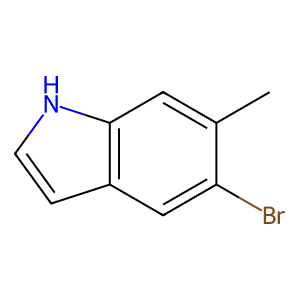 Cas:1000343-13-4
