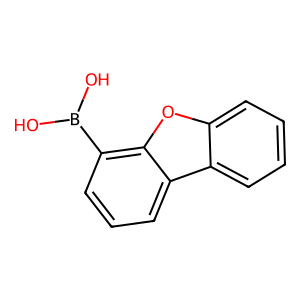
Dibenzofuran-4-boronic acid
Names and Identifiers of Dibenzofuran-4-boronic acid
CAS Number |
100124-06-9 |
|---|---|
EC Number |
672-293-9 |
MDL Number |
MFCD00092336 |
IUPAC Name |
dibenzofuran-4-ylboronic acid |
InChI |
InChI=1S/C12H9BO3/c14-13(15)10-6-3-5-9-8-4-1-2-7-11(8)16-12(9)10/h1-7,14-15H |
InChIKey |
ZXHUJRZYLRVVNP-UHFFFAOYSA-N |
Canonical SMILES |
B(C1=C2C(=CC=C1)C3=CC=CC=C3O2)(O)O |
UNSPSC Code |
12352100 |
Physical and chemical properties of Dibenzofuran-4-boronic acid
Acidity coefficient |
8.04±0.30(Predicted) |
|---|---|
Boiling Point |
438.5±37.0 °C at 760 mmHg |
BRN |
1645426 |
Density |
1.3±0.1 g/cm3 |
Exact Mass |
212.064468 |
Flash Point |
219.0±26.5 °C |
Index of Refraction |
1.701 |
LogP |
3.49 |
Melting Point |
286-291 °C(lit.) |
Molecular Formula |
C12H9BO3 |
Molecular Weight |
212.009 |
PSA |
53.60000 |
Storage condition |
0-6°C |
Vapour Pressure |
0.0±1.1 mmHg at 25°C |
Safety Information of Dibenzofuran-4-boronic acid

Applications of Dibenzofuran-4-boronic acid
The applications of dibenzofuran-4-boronic acid are diverse:
- Organic Synthesis: It serves as a key intermediate in the synthesis of pharmaceuticals and agrochemicals.
- Material Science: Used in the development of organic light-emitting diodes (OLEDs) and other electronic materials due to its electronic properties.
- Bioconjugation: Boronic acids can be utilized in bioconjugation techniques for labeling biomolecules.
Interaction Studies of Dibenzofuran-4-boronic acid
Interaction studies involving dibenzofuran-4-boronic acid primarily focus on its reactivity with various electrophiles and nucleophiles in synthetic chemistry. The compound's ability to form stable complexes with transition metals enhances its utility in catalysis. Additionally, studies have examined its interaction with biological targets to assess potential therapeutic applications, particularly concerning its anticancer properties.
Biological Activity of Dibenzofuran-4-boronic acid
While specific biological activities of dibenzofuran-4-boronic acid are not extensively documented, boronic acids are known to exhibit various biological properties, including:
- Anticancer Activity: Some studies suggest that boronic acids can inhibit proteasome activity, leading to apoptosis in cancer cells.
- Antimicrobial Properties: Certain derivatives have shown potential antimicrobial effects against various pathogens.
Research continues to explore the potential therapeutic applications of dibenzofuran-4-boronic acid and its derivatives.
Physical sample testing spectrum (NMR) of Dibenzofuran-4-boronic acid

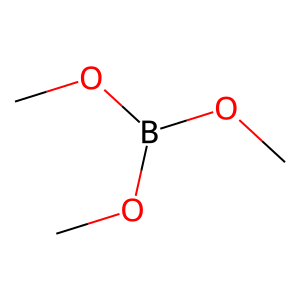 Cas:121-43-7

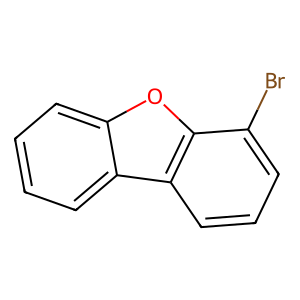 Cas:89827-45-2

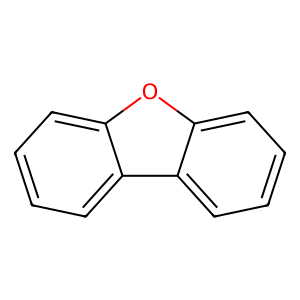 Cas:132-64-9
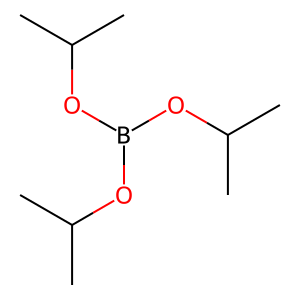 Cas:5419-55-6