
Disodium terephthalate
Names and Identifiers of Disodium terephthalate
CAS Number |
10028-70-3 |
|---|---|
EC Number |
233-075-5 |
IUPAC Name |
disodium;terephthalate |
InChI |
InChI=1S/C8H6O4.2Na/c9-7(10)5-1-2-6(4-3-5)8(11)12;;/h1-4H,(H,9,10)(H,11,12);;/q;2*+1/p-2 |
InChIKey |
VIQSRHWJEKERKR-UHFFFAOYSA-L |
Canonical SMILES |
C1=CC(=CC=C1C(=O)[O-])C(=O)[O-].[Na+].[Na+] |
UNII |
GI30ZOC0OO |
Physical and chemical properties of Disodium terephthalate
Boiling Point |
392.4ºC at 760 mmHg |
|---|---|
Exact Mass |
209.99000 |
Flash Point |
205.3ºC |
Molecular Formula |
C8H4Na2O4 |
Molecular Weight |
210.09400 |
PSA |
80.26000 |
Vapour Pressure |
7.35E-07mmHg at 25°C |
Water Solubility |
Soluble in water. |
Applications of Disodium terephthalate
Disodium terephthalate has various applications across different fields:
- Polymer Production: It serves as a key monomer in the synthesis of polyesters, particularly polyethylene terephthalate (PET), which is widely used in textiles and packaging materials.
- Biochemical Research: As a biochemical reagent, it is utilized in life science research due to its properties as a biological material.
- Antioxidant Agent: Its potential antioxidant properties make it useful in pharmaceutical formulations aimed at combating oxidative stress.
Interaction Studies of Disodium terephthalate
Studies on disodium terephthalate have explored its interactions with various biological systems. For instance, its role as an antioxidant has been investigated concerning its ability to mitigate oxidative damage in cellular environments. Additionally, research into its solubility and reactivity profiles helps understand its behavior in biological systems, crucial for developing therapeutic applications.
Biological Activity of Disodium terephthalate
Disodium terephthalate has been studied for its biological activity, particularly its antioxidant properties. Research indicates that it may help protect pancreatic islets from damage caused by cytokines, suggesting potential applications in diabetes research and treatment. Moreover, it exhibits properties that may be beneficial in preventing oxidative stress-related damage in myocardial and pulmonary tissues.
Physical sample testing spectrum (NMR) of Disodium terephthalate

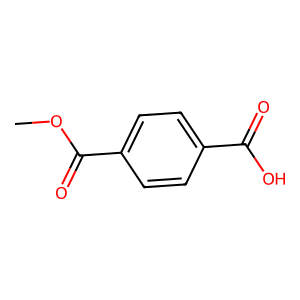 Cas:1679-64-7

 Cas:100-21-0