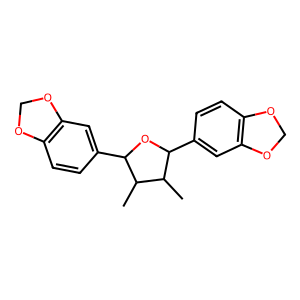
Galbacin
Names and Identifiers of Galbacin
CAS Number |
178740-32-4 |
|---|---|
IUPAC Name |
5-[5-(1,3-benzodioxol-5-yl)-3,4-dimethyloxolan-2-yl]-1,3-benzodioxole |
InChI |
InChI=1S/C20H20O5/c1-11-12(2)20(14-4-6-16-18(8-14)24-10-22-16)25-19(11)13-3-5-15-17(7-13)23-9-21-15/h3-8,11-12,19-20H,9-10H2,1-2H3 |
InChIKey |
QFUXQRHAJWXPGP-UHFFFAOYSA-N |
Canonical SMILES |
CC1C(C(OC1C2=CC3=C(C=C2)OCO3)C4=CC5=C(C=C4)OCO5)C |
Physical and chemical properties of Galbacin
Boiling Point |
460.6±45.0 °C at 760 mmHg |
|---|---|
Density |
1.3±0.1 g/cm3 |
Exact Mass |
340.131073 |
Flash Point |
190.1±28.6 °C |
Index of Refraction |
1.585 |
LogP |
4.77 |
Molecular Formula |
C20H20O5 |
Molecular Weight |
340.370 |
Storage condition |
-20℃ |
Vapour Pressure |
0.0±1.1 mmHg at 25°C |
Applications of Galbacin
(-)-Galbacin has diverse applications across various fields:
- Chemistry: It serves as a chiral building block in synthesizing complex molecules.
- Biology: Investigated for its potential therapeutic effects, particularly in drug discovery.
- Industry: Utilized in producing fine chemicals and pharmaceuticals due to its unique properties and reactivity.
Interaction Studies of Galbacin
Studies exploring the interactions of (-)-Galbacin with biological targets have revealed its potential to modulate enzyme activity and influence cellular pathways. These interactions are crucial for understanding its biological effects and therapeutic potential. For instance, research has demonstrated its ability to inhibit specific enzymes linked to cancer cell proliferation, suggesting a pathway for developing anticancer drugs.
Biological Activity of Galbacin
Research indicates that (-)-Galbacin exhibits significant biological activities, particularly in the realms of antimicrobial and anticancer properties. Its mechanism of action may involve interactions with specific enzymes or receptors, modulating biochemical pathways that affect cell proliferation and survival. Studies have shown that it can inhibit certain enzymes linked to cancer progression, making it a candidate for further therapeutic exploration.
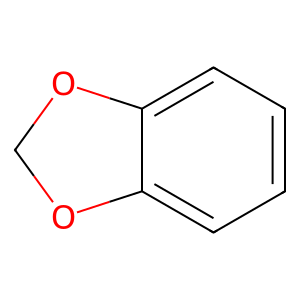 Cas:274-09-9
