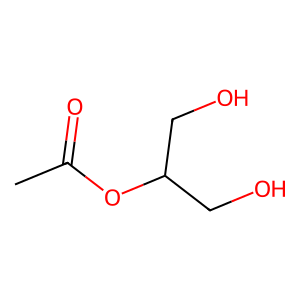
Glyceryl 2-acetate
Names and Identifiers of Glyceryl 2-acetate
CAS Number |
100-78-7 |
|---|---|
IUPAC Name |
1,3-dihydroxypropan-2-yl acetate |
InChI |
InChI=1S/C5H10O4/c1-4(8)9-5(2-6)3-7/h5-7H,2-3H2,1H3 |
InChIKey |
QPCIUXWQCCFLCI-UHFFFAOYSA-N |
Canonical SMILES |
CC(=O)OC(CO)CO |
UNII |
4Z481ZM9Z9 |
Physical and chemical properties of Glyceryl 2-acetate
Exact Mass |
134.05800 |
|---|---|
Molecular Formula |
C5H10O4 |
Molecular Weight |
134.13000 |
PSA |
66.76000 |
Applications of Glyceryl 2-acetate
Glyceryl 2-acetate has several applications across different fields:
- Chemical Intermediate: It serves as a building block in the synthesis of various chemicals and polymers.
- Biological Research: Used as a substrate in enzymatic studies to understand glycerol derivatives' metabolism.
- Industrial Uses: Acts as a plasticizer, solvent, and additive in biodiesel production and other biofuels.
Interaction Studies of Glyceryl 2-acetate
Research indicates that glyceryl 2-acetate interacts with various biological molecules, influencing metabolic pathways. Its metabolites, glycerol and acetic acid, are integral to energy production processes within cells. Moreover, studies suggest that glyceryl 2-acetate may have implications in drug formulation due to its properties as a solvent and plasticizer.
Biological Activity of Glyceryl 2-acetate
In biological systems, glyceryl 2-acetate is metabolized to glycerol and acetic acid, which are essential components in metabolic pathways such as glycolysis and the citric acid cycle. The acetate group can also participate in acetylation reactions that influence gene expression and protein function by modifying histones and other proteins. This activity highlights its potential role in biochemical processes and metabolic regulation.