
Jineol
CAS No.:
178762-28-2
M. Wt:
161.15700
M. Fa:
C9H7NO2
InChI Key:
IGDFDIZIHMFYGR-UHFFFAOYSA-N
Names and Identifiers of Jineol
CAS Number |
178762-28-2 |
|---|---|
EC Number |
849-461-7 |
IUPAC Name |
quinoline-3,8-diol |
InChI |
InChI=1S/C9H7NO2/c11-7-4-6-2-1-3-8(12)9(6)10-5-7/h1-5,11-12H |
InChIKey |
IGDFDIZIHMFYGR-UHFFFAOYSA-N |
Canonical SMILES |
C1=CC2=CC(=CN=C2C(=C1)O)O |
UNII |
TG4DD1DY9O |
Physical and chemical properties of Jineol
Boiling Point |
397.2ºC at 760mmHg |
|---|---|
Density |
1.418g/cm3 |
Exact Mass |
161.04800 |
Flash Point |
194ºC |
Index of Refraction |
1.742 |
LogP |
1.64600 |
Molecular Formula |
C9H7NO2 |
Molecular Weight |
161.15700 |
PSA |
53.35000 |
Vapour Pressure |
7.08E-07mmHg at 25°C |
Safety Information of Jineol

Applications of Jineol
Jineol has several applications across different fields:
- Cosmetics: Due to its anti-melanogenic properties, jineol is explored for use in skin whitening products.
- Pharmaceuticals: Its antibacterial and anticancer activities make it a candidate for developing new therapeutic agents.
- Food Industry: As a natural antioxidant, jineol may be used to enhance the shelf life of food products.
Interaction Studies of Jineol
Research on jineol's interactions reveals its potential to modulate various signaling pathways. For instance, it affects the extracellular signal-regulated kinase (ERK) and p38 mitogen-activated protein kinase pathways, which are crucial in regulating melanin synthesis. These interactions suggest that jineol could be a valuable compound for further studies aimed at understanding its mechanisms of action in biological systems.
Biological Activity of Jineol
The biological activities of jineol are extensive:
- Antioxidant Activity: Jineol exhibits potent antioxidant properties, scavenging free radicals and reducing oxidative stress through mechanisms involving hydrogen atom transfer and electron donation.
- Antibacterial Effects: Studies show that jineol can significantly reduce bacterial cell viability and promote potassium ion release from bacterial cells, indicating its potential as an antibacterial agent.
- Anti-cancer Properties: Jineol has been investigated for its anticancer effects, particularly in inhibiting cell proliferation and inducing apoptosis in cancer cell lines.
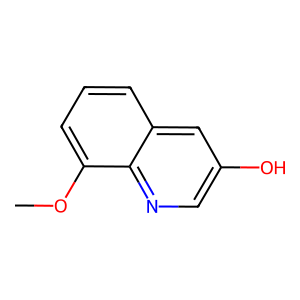 Cas:214349-09-4

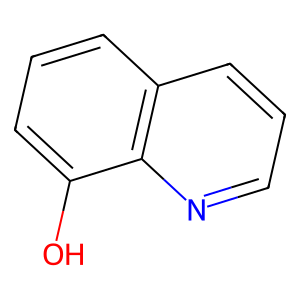 Cas:148-24-3
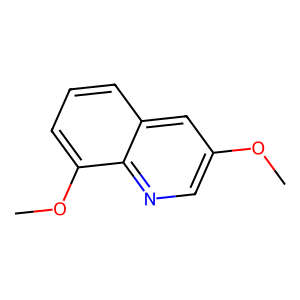 Cas:214349-04-9