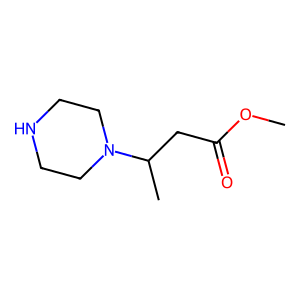
Methyl 3-(piperazin-1-yl)butanoate
CAS No.:
479065-32-2
M. Wt:
186.25100
M. Fa:
C9H18N2O2
InChI Key:
YIWAVXHDSUZMQQ-UHFFFAOYSA-N
Names and Identifiers of Methyl 3-(piperazin-1-yl)butanoate
CAS Number |
479065-32-2 |
|---|---|
IUPAC Name |
methyl 3-piperazin-1-ylbutanoate |
InChI |
InChI=1S/C9H18N2O2/c1-8(7-9(12)13-2)11-5-3-10-4-6-11/h8,10H,3-7H2,1-2H3 |
InChIKey |
YIWAVXHDSUZMQQ-UHFFFAOYSA-N |
Canonical SMILES |
CC(CC(=O)OC)N1CCNCC1 |
Physical and chemical properties of Methyl 3-(piperazin-1-yl)butanoate
Exact Mass |
186.13700 |
|---|---|
LogP |
0.10990 |
Molecular Formula |
C9H18N2O2 |
Molecular Weight |
186.25100 |
PSA |
41.57000 |
Safety Information of Methyl 3-(piperazin-1-yl)butanoate

Applications of Methyl 3-(piperazin-1-yl)butanoate
Methyl 3-(piperazin-1-yl)butanoate has several applications in various fields:
- Medicinal Chemistry: It serves as an intermediate in the synthesis of pharmaceuticals targeting neurological disorders or infections.
- Chemical Research: The compound is used as a building block in organic synthesis to develop more complex molecules.
- Biological Studies: Investigated for its potential therapeutic effects, contributing to drug discovery efforts.
Interaction Studies of Methyl 3-(piperazin-1-yl)butanoate
Interaction studies reveal that methyl 3-(piperazin-1-yl)butanoate may engage with various biological targets, influencing their activity. These interactions include:
- Binding to receptors involved in neurotransmission.
- Modulating enzyme activity related to metabolic pathways.
Understanding these interactions is crucial for optimizing its therapeutic potential and developing new drugs.
Biological Activity of Methyl 3-(piperazin-1-yl)butanoate
Methyl 3-(piperazin-1-yl)butanoate exhibits significant biological activity, particularly due to the presence of the piperazine moiety, which is known for its pharmacological properties. Research indicates potential activities against:
- Antimicrobial agents: The compound may inhibit the growth of bacteria and fungi.
- CNS disorders: It could have effects on neurotransmitter systems, making it a candidate for treating conditions such as anxiety or depression.
The precise mechanisms of action are still under investigation, but interactions with specific receptors or enzymes are anticipated.
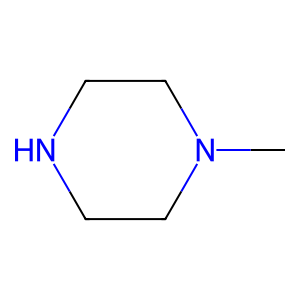 Cas:109-01-3

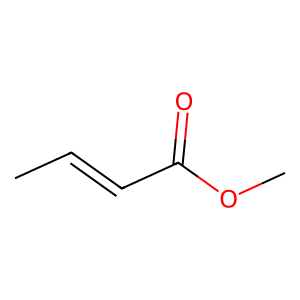 Cas:18707-60-3
