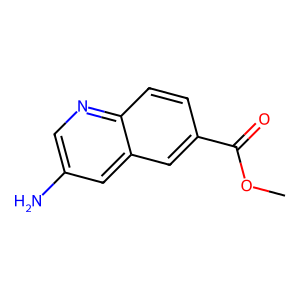
Methyl 3-aminoquinoline-6-carboxylate
CAS No.:
1780509-06-9
M. Wt:
202.209
M. Fa:
C11H10N2O2
InChI Key:
ZUSFPZQYSBSCDL-UHFFFAOYSA-N
Appearance:
Yellow Solid
Names and Identifiers of Methyl 3-aminoquinoline-6-carboxylate
CAS Number |
1780509-06-9 |
|---|---|
MDL Number |
MFCD28404719 |
IUPAC Name |
methyl 3-aminoquinoline-6-carboxylate |
InChI |
InChI=1S/C11H10N2O2/c1-15-11(14)7-2-3-10-8(4-7)5-9(12)6-13-10/h2-6H,12H2,1H3 |
InChIKey |
ZUSFPZQYSBSCDL-UHFFFAOYSA-N |
Canonical SMILES |
COC(=O)C1=CC2=CC(=CN=C2C=C1)N |
UNSPSC Code |
12352100 |
Physical and chemical properties of Methyl 3-aminoquinoline-6-carboxylate
Boiling Point |
381.7±22.0 °C at 760 mmHg |
|---|---|
Density |
1.3±0.1 g/cm3 |
Exact Mass |
202.074234 |
Flash Point |
184.6±22.3 °C |
Index of Refraction |
1.664 |
LogP |
1.52 |
Molecular Formula |
C11H10N2O2 |
Molecular Weight |
202.209 |
Vapour Pressure |
0.0±0.9 mmHg at 25°C |
Safety Information of Methyl 3-aminoquinoline-6-carboxylate

Applications of Methyl 3-aminoquinoline-6-carboxylate
Methyl 3-aminoquinoline-6-carboxylate finds applications in various fields:
- Pharmaceutical Development: Its potential as an antimicrobial and anti-inflammatory agent makes it a candidate for drug development.
- Organic Synthesis: The compound serves as an intermediate in synthesizing other biologically active molecules.
- Research Tool: It can be used in biochemical studies to explore mechanisms of action related to quinoline derivatives.
Interaction Studies of Methyl 3-aminoquinoline-6-carboxylate
Interaction studies have indicated that methyl 3-aminoquinoline-6-carboxylate can interact with various biological targets, including enzymes and receptors. Its ability to inhibit carbonic anhydrases suggests potential interactions with other metalloenzymes involved in physiological processes. Further research is needed to elucidate these interactions fully and assess their implications for therapeutic applications.
Biological Activity of Methyl 3-aminoquinoline-6-carboxylate
Methyl 3-aminoquinoline-6-carboxylate exhibits significant biological activities, particularly in the field of medicinal chemistry. It has been studied for its potential as:
- Antimicrobial Agent: Compounds with similar structures have shown efficacy against various pathogens, suggesting that methyl 3-aminoquinoline-6-carboxylate may possess similar properties.
- Inhibitor of Carbonic Anhydrases: Research indicates that quinoline derivatives can inhibit carbonic anhydrases, enzymes involved in critical physiological processes. This inhibition could lead to therapeutic applications in treating conditions like glaucoma and edema.
- Anti-inflammatory Activity: Some studies suggest that compounds in this class may exhibit anti-inflammatory effects, further broadening their therapeutic potential.