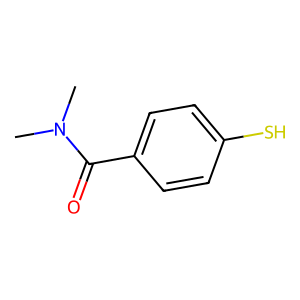
N,N-dimethyl-4-sulfanylbenzamide
CAS No.:
62778-80-7
M. Wt:
181.25500
M. Fa:
C9H11NOS
InChI Key:
-
Names and Identifiers of N,N-dimethyl-4-sulfanylbenzamide
CAS Number |
62778-80-7 |
|---|---|
IUPAC Name |
N,N-dimethyl-4-sulfanyl-benzamide |
Canonical SMILES |
CN(C)C(=O)C1=CC=C(C=C1)S |
Physical and chemical properties of N,N-dimethyl-4-sulfanylbenzamide
Exact Mass |
181.05600 |
|---|---|
LogP |
1.67710 |
Molecular Formula |
C9H11NOS |
Molecular Weight |
181.25500 |
PSA |
59.11000 |
Safety Information of N,N-dimethyl-4-sulfanylbenzamide

Applications of N,N-dimethyl-4-sulfanylbenzamide
N,N-Dimethyl-4-sulfanylbenzamide has potential applications in various fields:
- Pharmaceuticals: As a precursor or intermediate in drug synthesis, particularly for compounds targeting microbial infections.
- Agriculture: Potential use as a pesticide or herbicide due to its biological activity against pests.
- Chemical Research: Utilized in studies exploring thio compounds and their reactivity.
Interaction Studies of N,N-dimethyl-4-sulfanylbenzamide
Interaction studies have shown that N,N-Dimethyl-4-sulfanylbenzamide can interact with various biological molecules, including:
- Proteins: Binding studies suggest it may inhibit specific enzymes involved in metabolic pathways.
- DNA/RNA: Preliminary studies indicate potential intercalation or interaction with nucleic acids, impacting gene expression.
Biological Activity of N,N-dimethyl-4-sulfanylbenzamide
Research indicates that N,N-Dimethyl-4-sulfanylbenzamide may exhibit significant biological activities, including:
- Antimicrobial Properties: Compounds with sulfanyl groups often show activity against various bacterial strains, potentially due to their ability to disrupt cellular processes.
- Antioxidant Effects: The presence of sulfur may contribute to antioxidant activity, helping to neutralize free radicals in biological systems.
- Enzyme Inhibition: This compound may interact with specific enzymes, influencing metabolic pathways.