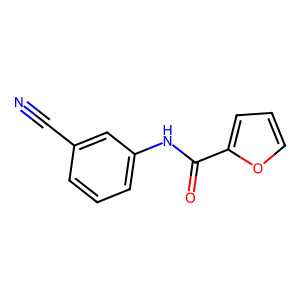
N-(3-cyanophenyl)furan-2-carboxamide
Names and Identifiers of N-(3-cyanophenyl)furan-2-carboxamide
CAS Number |
349644-67-3 |
|---|---|
IUPAC Name |
N-(3-cyanophenyl)furan-2-carboxamide |
Canonical SMILES |
C1=CC(=CC(=C1)NC(=O)C2=CC=CO2)C#N |
Physical and chemical properties of N-(3-cyanophenyl)furan-2-carboxamide
Boiling Point |
272.4±20.0 °C at 760 mmHg |
|---|---|
Density |
1.3±0.1 g/cm3 |
Exact Mass |
212.058578 |
Flash Point |
118.5±21.8 °C |
Index of Refraction |
1.612 |
LogP |
2.48 |
Molecular Formula |
C12H8N2O2 |
Molecular Weight |
212.204 |
Vapour Pressure |
0.0±0.6 mmHg at 25°C |
Safety Information of N-(3-cyanophenyl)furan-2-carboxamide

Applications of N-(3-cyanophenyl)furan-2-carboxamide
N-(3-cyanophenyl)furan-2-carboxamide has several applications:
- Chemistry: It serves as a building block in the synthesis of more complex organic molecules.
- Biology: Its potential biological activities make it a candidate for drug development, particularly in targeting microbial infections and cancer cells.
- Industry: The compound may be utilized in developing new materials or specialty chemicals due to its unique structural features.
Interaction Studies of N-(3-cyanophenyl)furan-2-carboxamide
Interaction studies are essential for understanding how N-(3-cyanophenyl)furan-2-carboxamide interacts with biological systems. These studies often involve molecular docking simulations to evaluate binding affinities with specific targets, such as enzymes or receptors involved in disease pathways. Investigating these interactions helps elucidate its mechanism of action and potential therapeutic applications.
Biological Activity of N-(3-cyanophenyl)furan-2-carboxamide
Research indicates that N-(3-cyanophenyl)furan-2-carboxamide possesses potential biological activities, particularly in the realms of antimicrobial and anticancer properties. Compounds containing furan rings have been noted for their significant biological activities, and N-(3-cyanophenyl)furan-2-carboxamide is being investigated for its efficacy against various pathogens and cancer cell lines. Its structural features may contribute to its ability to interact with biological targets effectively.