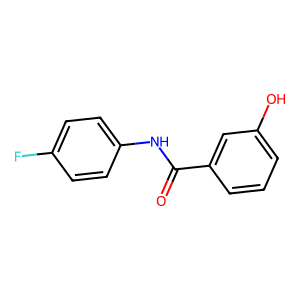
N-(4-fluorophenyl)-3-hydroxybenzamide
CAS No.:
97480-96-1
M. Wt:
231.22
M. Fa:
C13H10FNO2
InChI Key:
HNEJDARAUWWGIN-UHFFFAOYSA-N
Names and Identifiers of N-(4-fluorophenyl)-3-hydroxybenzamide
CAS Number |
97480-96-1 |
|---|---|
MDL Number |
MFCD11131047 |
IUPAC Name |
N-(4-fluorophenyl)-3-hydroxybenzamide |
InChI |
InChI=1S/C13H10FNO2/c14-10-4-6-11(7-5-10)15-13(17)9-2-1-3-12(16)8-9/h1-8,16H,(H,15,17) |
InChIKey |
HNEJDARAUWWGIN-UHFFFAOYSA-N |
Canonical SMILES |
C1=CC(=CC(=C1)O)C(=O)NC2=CC=C(C=C2)F |
UNSPSC Code |
12352100 |
Physical and chemical properties of N-(4-fluorophenyl)-3-hydroxybenzamide
Acidity coefficient |
9.20±0.10(Predicted) |
|---|---|
Boiling Point |
313.8±27.0 °C at 760 mmHg |
Density |
1.352±0.06 g/cm3(Predicted) |
H Bond Acceptors |
2 |
H Bond Donors |
2 |
LogP |
2.90426723633333 |
Molecular Formula |
C13H10FNO2 |
Molecular Weight |
231.22 |
Safety Information of N-(4-fluorophenyl)-3-hydroxybenzamide

Applications of N-(4-fluorophenyl)-3-hydroxybenzamide
N-(4-fluorophenyl)-3-hydroxybenzamide has several potential applications:
- Pharmaceutical Development: Its structural characteristics make it a candidate for drug development, particularly in targeting bacterial and viral infections.
- Research Tool: It can serve as a model compound in studies related to enzyme inhibition and drug-receptor interactions.
- Material Science: The unique properties of this compound may allow for applications in creating advanced materials or coatings.
Interaction Studies of N-(4-fluorophenyl)-3-hydroxybenzamide
Studies investigating the interactions of N-(4-fluorophenyl)-3-hydroxybenzamide with biological targets have highlighted its potential efficacy:
- Molecular Docking Studies: These studies suggest favorable binding interactions with specific protein targets, indicating its potential as a lead compound for drug design.
- Binding Affinity Assessments: Quantitative evaluations reveal promising binding affinities, which are critical for assessing its viability as a therapeutic agent.
Biological Activity of N-(4-fluorophenyl)-3-hydroxybenzamide
The biological activity of N-(4-fluorophenyl)-3-hydroxybenzamide has been explored in various studies, indicating potential therapeutic properties:
- Antimicrobial Activity: Research has shown that similar compounds exhibit antibacterial and antiviral properties, suggesting that N-(4-fluorophenyl)-3-hydroxybenzamide may also possess such activities.
- Enzyme Inhibition: The compound may act as an inhibitor for certain enzymes involved in disease processes, making it a candidate for further pharmacological studies.
- Toxicity Profiles: Preliminary toxicity assessments indicate that derivatives of this compound may have favorable safety profiles, making them suitable for further development as pharmaceuticals.