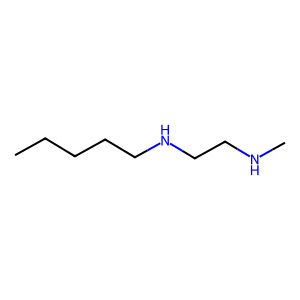
N-Methyl-N'-pentyl ethylenediamine
CAS No.:
886499-92-9
M. Wt:
144.258
M. Fa:
C8H20N2
InChI Key:
SYFHKIGUPPJUMS-UHFFFAOYSA-N
Names and Identifiers of N-Methyl-N'-pentyl ethylenediamine
CAS Number |
886499-92-9 |
|---|---|
MDL Number |
MFCD07370002 |
IUPAC Name |
N-methyl-N'-pentylethane-1,2-diamine |
InChI |
InChI=1S/C8H20N2/c1-3-4-5-6-10-8-7-9-2/h9-10H,3-8H2,1-2H3 |
InChIKey |
SYFHKIGUPPJUMS-UHFFFAOYSA-N |
Canonical SMILES |
CCCCCNCCNC |
UNSPSC Code |
12352100 |
Physical and chemical properties of N-Methyl-N'-pentyl ethylenediamine
Boiling Point |
200.4±8.0 °C at 760 mmHg |
|---|---|
Density |
0.8±0.1 g/cm3 |
Exact Mass |
144.162643 |
Flash Point |
74.3±12.0 °C |
Index of Refraction |
1.433 |
LogP |
1.39 |
Molecular Formula |
C8H20N2 |
Molecular Weight |
144.258 |
Vapour Pressure |
0.3±0.4 mmHg at 25°C |
Safety Information of N-Methyl-N'-pentyl ethylenediamine

Applications of N-Methyl-N'-pentyl ethylenediamine
The applications of amine span several domains:
- Pharmaceuticals: As a potential precursor for drug development, particularly in creating analgesics or other therapeutic agents.
- Chemical Synthesis: Used as a building block in organic synthesis for more complex molecules.
- Materials Science: Investigated for its potential use in developing polymers or other materials due to its unique properties.
Interaction Studies of N-Methyl-N'-pentyl ethylenediamine
Studies on the interactions of amine with biological systems are crucial for understanding its pharmacological potential. Key areas of focus include:
- Receptor Binding Studies: Evaluating how well the compound binds to specific receptors involved in pain and inflammation pathways.
- Enzyme Inhibition Tests: Assessing its ability to inhibit enzymes that play roles in various metabolic processes.
Such studies will help clarify its therapeutic viability and safety profile.
Biological Activity of N-Methyl-N'-pentyl ethylenediamine
Research indicates that amine exhibits notable biological activities, particularly in pharmacology. Its structure allows it to interact with various biological targets, potentially leading to:
- Analgesic Effects: Similar compounds have shown potential as pain relievers.
- Antimicrobial Properties: The presence of the amine group may enhance interaction with microbial targets, suggesting possible applications in treating infections.
Further studies are necessary to elucidate its specific mechanisms of action and efficacy compared to established drugs.