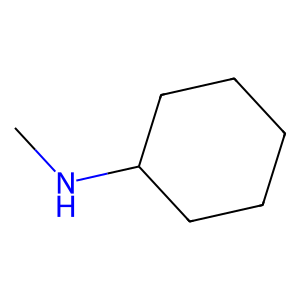
N-Methylcyclohexylamine
CAS No.:
100-60-7
M. Wt:
113.201
M. Fa:
C7H15N
InChI Key:
XTUVJUMINZSXGF-UHFFFAOYSA-N
Appearance:
Colorless Liquid
Names and Identifiers of N-Methylcyclohexylamine
CAS Number |
100-60-7 |
|---|---|
EC Number |
202-869-3 |
MDL Number |
MFCD00003832 |
IUPAC Name |
N-methylcyclohexanamine |
InChI |
InChI=1S/C7H15N/c1-8-7-5-3-2-4-6-7/h7-8H,2-6H2,1H3 |
InChIKey |
XTUVJUMINZSXGF-UHFFFAOYSA-N |
Canonical SMILES |
CNC1CCCCC1 |
UNII |
YH8PF4C1OW |
UNSPSC Code |
12352100 |
Physical and chemical properties of N-Methylcyclohexylamine
Acidity coefficient |
11.03±0.20(Predicted) |
|---|---|
Boiling Point |
146.5±8.0 °C at 760 mmHg |
BRN |
1523664 |
Density |
0.8±0.1 g/cm3 |
Exact Mass |
113.120445 |
explosive limit |
2.2-10.5%(V) |
Flash Point |
29.4±0.0 °C |
Index of Refraction |
1.451 |
LogP |
1.63 |
Melting Point |
−9-−7 °C(lit.) |
Molecular Formula |
C7H15N |
Molecular Weight |
113.201 |
pH |
12 (10g/l, H2O, 20℃) |
PSA |
12.03000 |
Sensitivity |
Air Sensitive |
Solubility |
54g/l |
Storage condition |
Flammables area |
Vapour density |
4 (vs air) |
Vapour Pressure |
4.6±0.3 mmHg at 25°C |
Water Solubility |
5.4 g/100 mL (20 ºC) |
Safety Information of N-Methylcyclohexylamine


Applications of N-Methylcyclohexylamine
N-Methylcyclohexylamine has diverse applications across various fields:
- Pharmaceuticals: It is used as an intermediate in the synthesis of drugs, particularly those targeting cancer pathways.
- Chemical Manufacturing: The compound serves as a building block for producing other chemicals and materials, including diisocyanates used in polyurethane production.
- Research: It is utilized in laboratory settings for studying reaction mechanisms involving amines and their derivatives.
Interaction Studies of N-Methylcyclohexylamine
Interaction studies involving N-Methylcyclohexylamine have highlighted its compatibility and reactivity with various substances:
- Incompatibilities: The compound may react adversely with isocyanates, halogenated organics, peroxides, and acidic compounds, which could lead to hazardous situations.
- Catalytic Reactions: Research has indicated its potential role in catalytic processes involving other amines, showcasing its versatility in synthetic organic chemistry.
Biological Activity of N-Methylcyclohexylamine
N-Methylcyclohexylamine has been identified as a human xenobiotic metabolite, meaning it may play a role in metabolic processes when introduced into biological systems. Its biological activity includes potential applications in cancer research, as it serves as a precursor for compounds used in developing Mps1 kinase inhibitors, which are studied for their role in cancer treatment.
Physical sample testing spectrum (NMR) of N-Methylcyclohexylamine

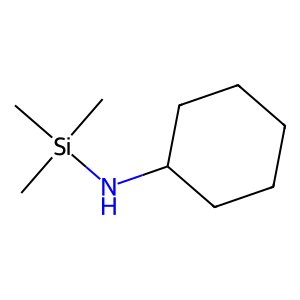 Cas:5577-68-4

 Cas:74-88-4

 Cas:1074-58-4
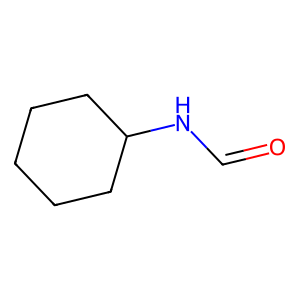 Cas:766-93-8